
On the back wall of the Lancisi Hall stands the monumental entrance, prominently displaying the heraldic emblem of Pope Pius VI Braschi, under whose pontificate the Pharmacy was established. The spezieria, which ensured the prompt delivery of spices and medicines requested by doctors, was equipped with alembics, boilers, distillers, jars, mortars, and pestles. It stored both chemical and botanical products and was capable of preparing large quantities of pharmaceuticals. The pharmacy also housed medical formularies and herbals, including “corteccia peruviana” (Peruvian bark), quinine—a revolutionary drug at the time for treating malaria—which was kept in a specially designated room.
Points of interest
Sixtus IV Visits the Newly Built Hospital
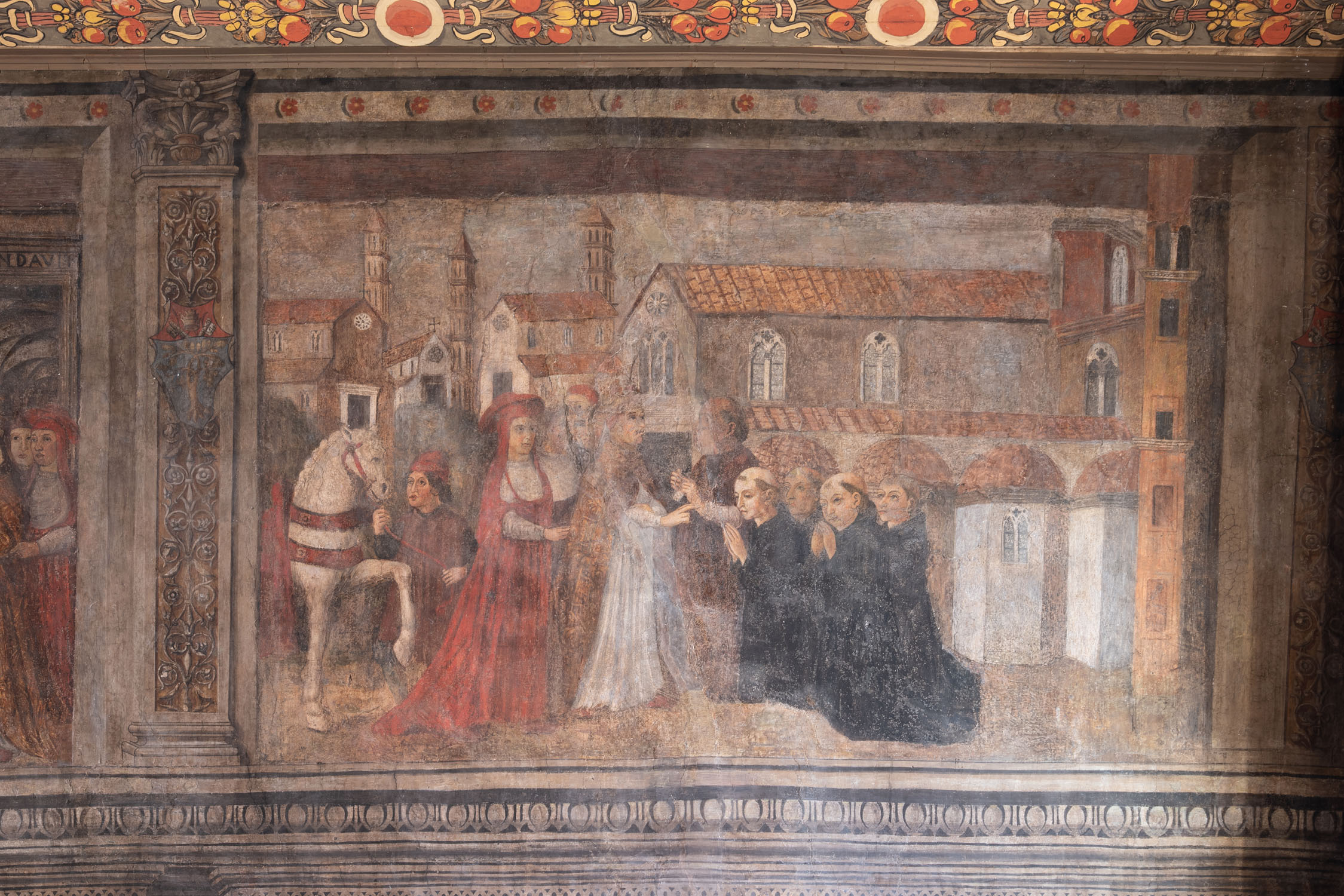
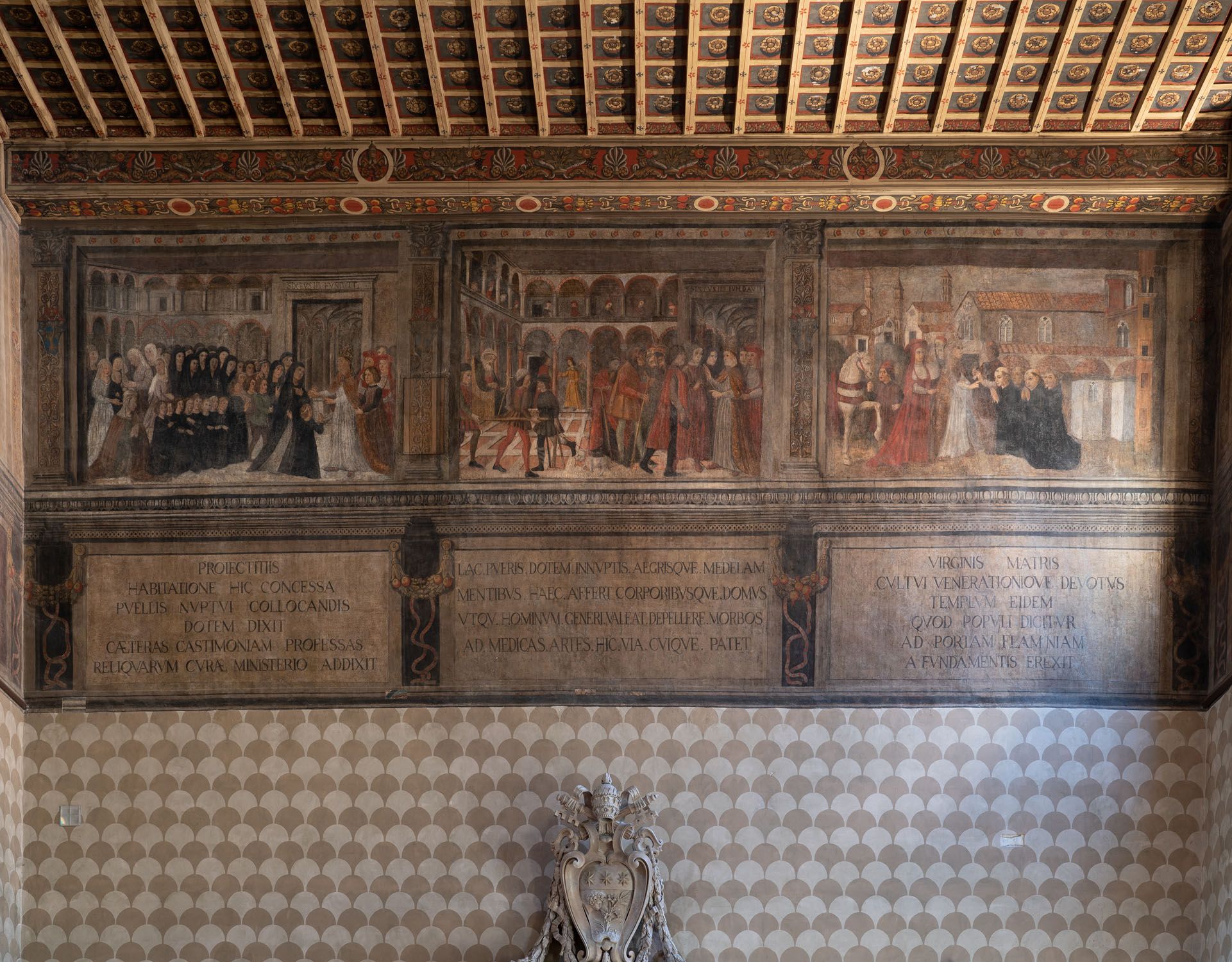
On the west wall of the ward, above the door that once led to the old spezieria, between the painting depicting “Sixtus IV Establishes the Hospice for Foundlings” and the one illustrating the creation of a “Shelter for Impoverished Nobles”, there is a hidden secret window. Disguised within the frescoes, this opening allowed the Commander to discreetly observe what was happening in the wards without being seen. It corresponded to one of the rooms in the Commander’s apartments, now home to the Lancisiana Library. The third painting on the wall portrays the pope’s donation of the Church of Santa Maria del Popolo to the Augustinians. .
Sixtus IV Receives Visits from the Rulers of Various European Nations
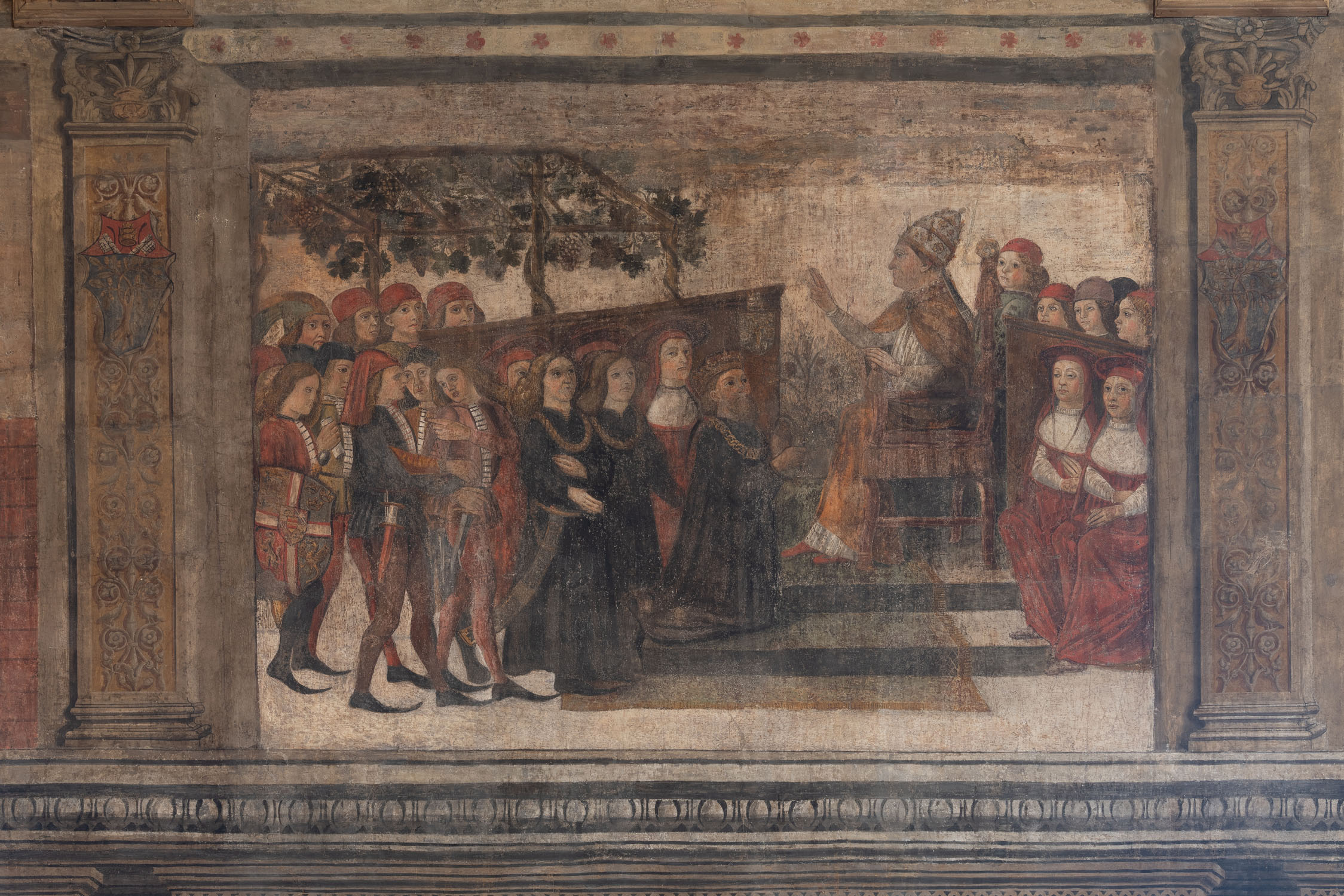
The rulers kneel before the pope and present their gifts: Christina I, ruler of Denmark, Sweden, and Norway; Ferdinand, King of Naples; Nicholas Ujlaki, King of Bosnia and Wallachia; and Eleanor of Aragon, daughter of the King of Naples and future wife of Ercole d’Este. The pope grants new privileges to the mendicant orders: the Franciscans, Dominicans, Carmelites, and Carthusians.
Sixtus IV Entrusts the Vatican Library to Bartolomeo Sacchi, Known as Platina, and Other Episodes from the Pope’s Life
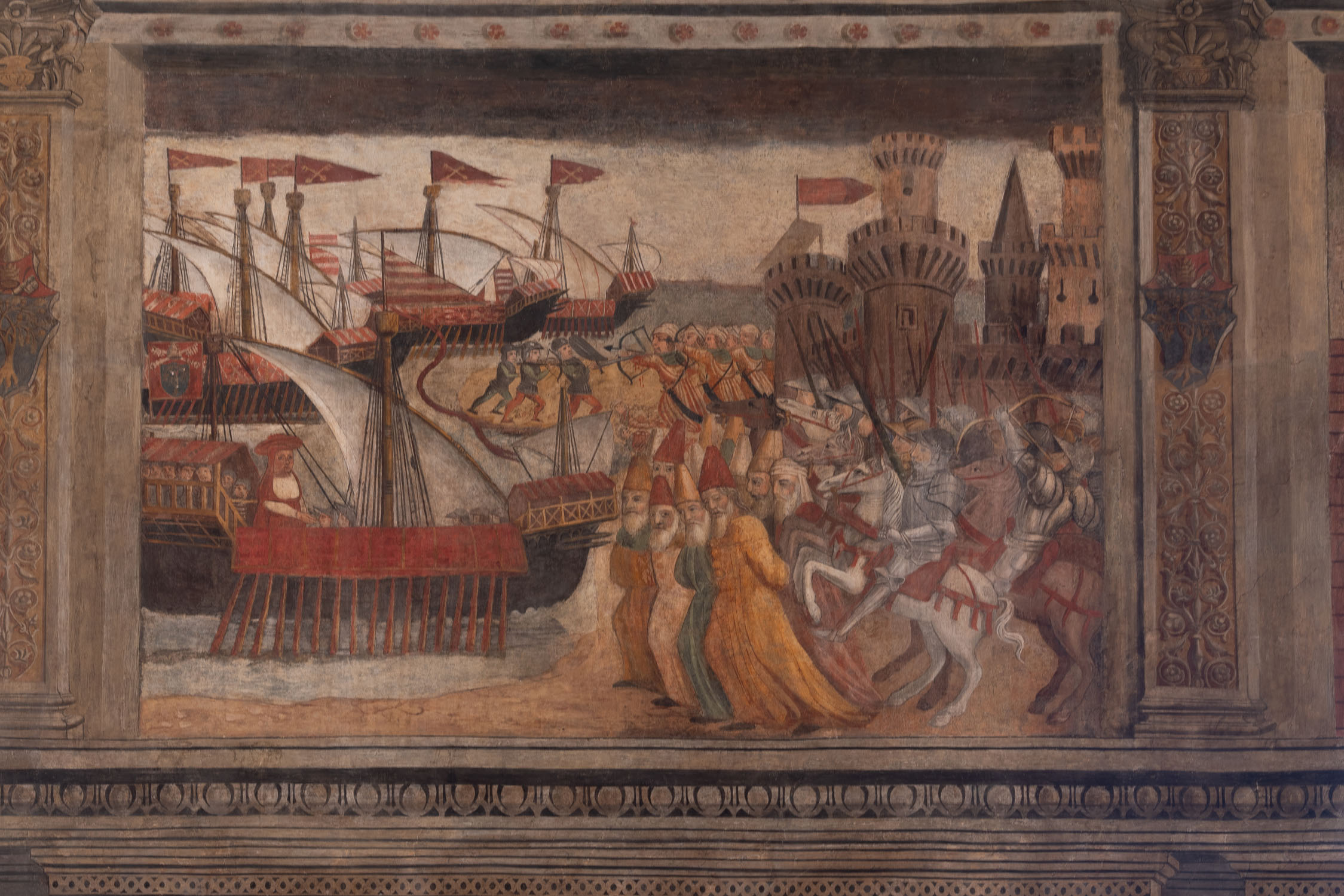
To Platina, author of the texts of all the captions that appear in Latin under each painting, was appointed by Sixtus IV in 1475 as Prefect of the Vatican Library and was tasked with writing a history of the pontificate. His work became renowned for moving beyond the traditional annalistic approach, favoring a biographical perspective. The series concludes with the depiction of the visit of Charlotte, Queen of Cyprus (attributed to the school of Melozzo da Forlì), and the capture of Smyrna by the Papal Fleet, marking the end of the Lancisi Wing’s narrative.
Other Episodes from the Life of the Pope Continue in the Baglivi Wing
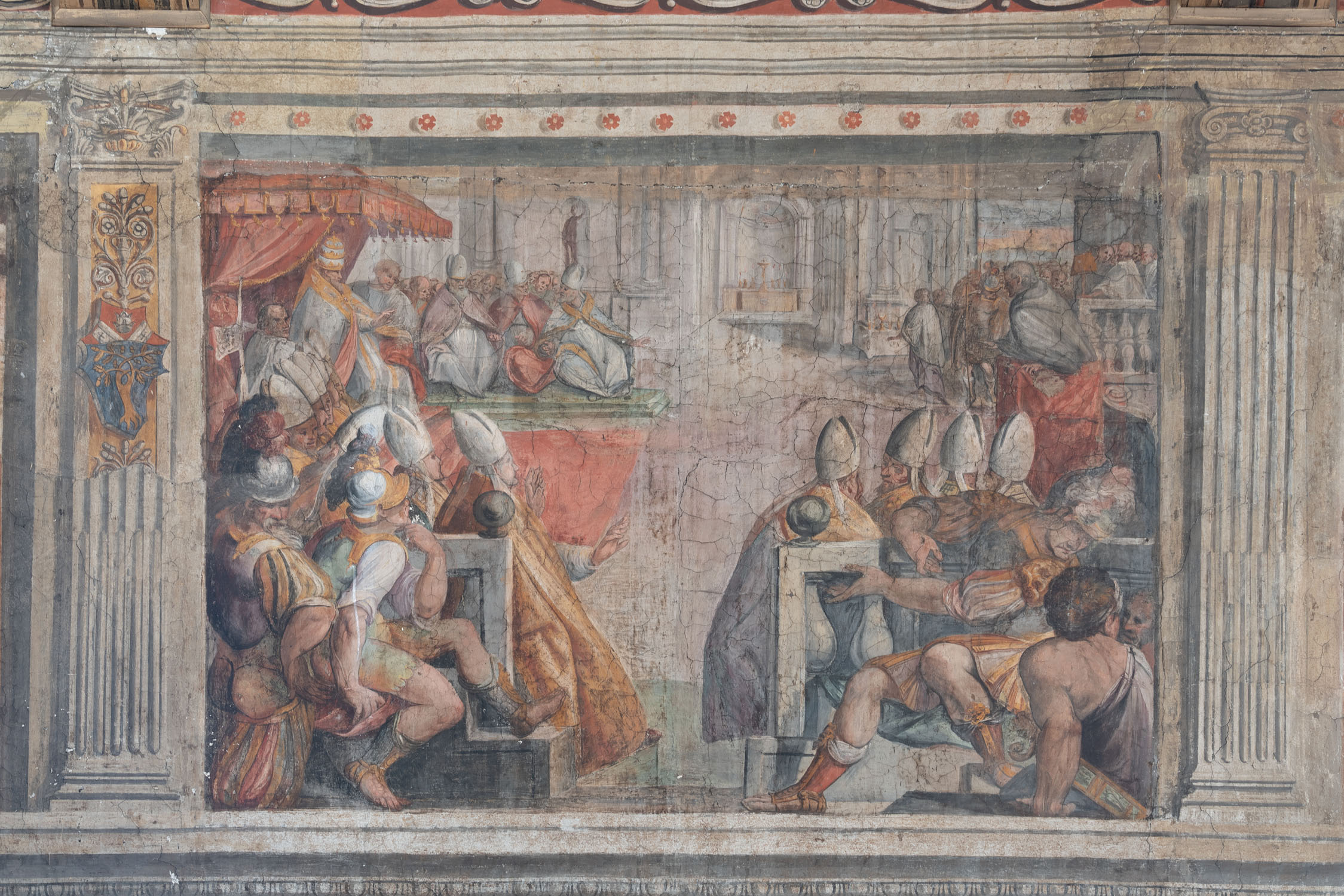
Crossing the lantern tower once again, the narrative continues in the Baglivi Wing, where further episodes and historical events from the life of Sixtus IV are depicted. Among them are the Canonization of Saint Bonaventure of Bagnoregio and the reconstruction of Santa Maria della Pace, executed by artists from the Marche region.
The End of the Life and Pontificate of Sixtus IV
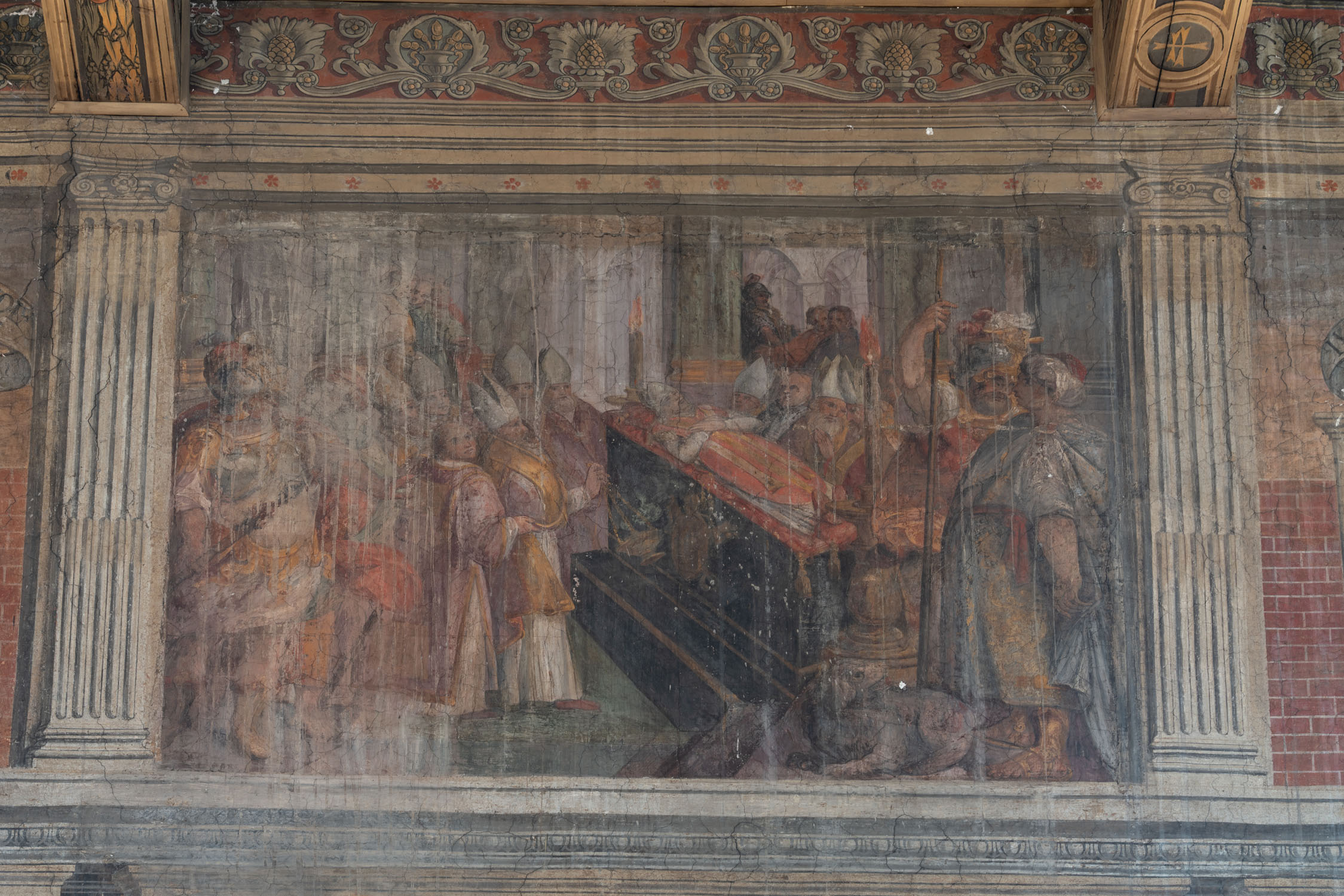
The frescoes depict the pope’s funeral. Saint Francis presents the pontiff to God, along with his most significant works, such as Santa Maria della Pace and the Ospedale di Santo Spirito. Finally, Saint Peter welcomes Sixtus IV into Paradise. The painting of the last panel appears to be later, dating to the 16th century, while the others were all completed by the end of the 15th century. The visit concludes in the same hall, the Baglivi Wing, where it originally began.