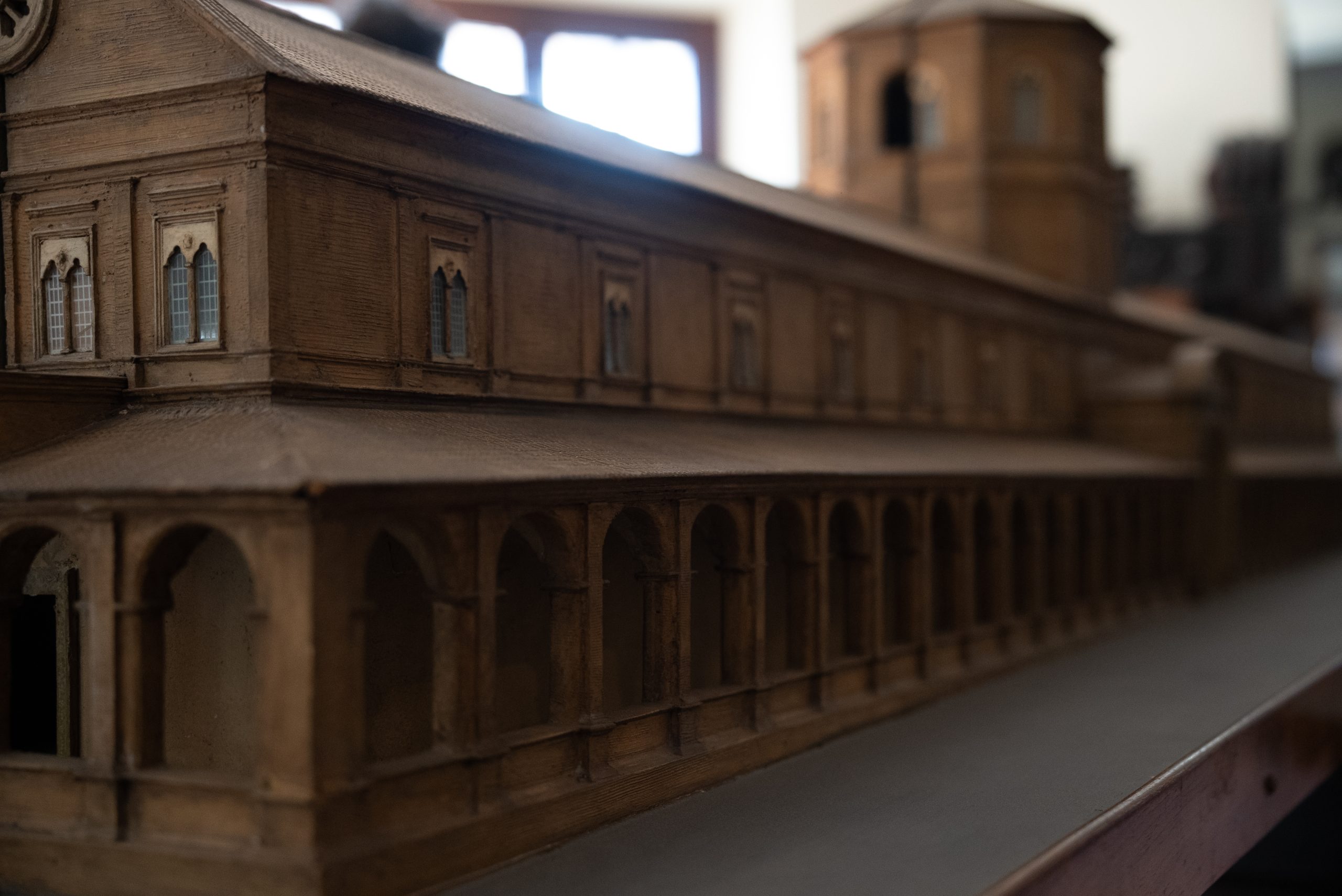

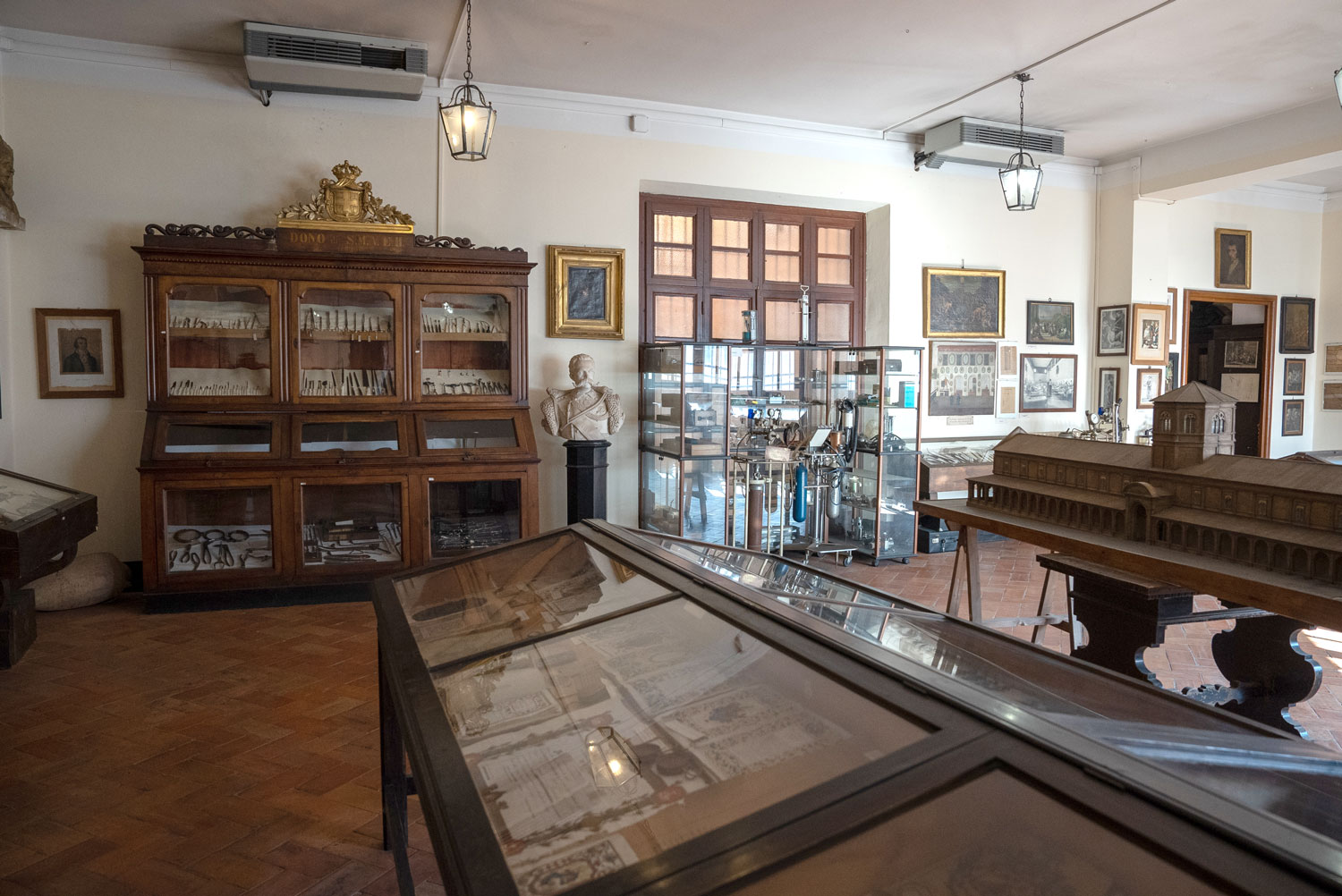
The Historical Museum of Medical Art is housed in the building commissioned by Pope Alexander VII Chigi, known as the Ospedaletto. This structure represents the 17th-century expansion of Santo Spirito, built perpendicular to the 15th-century hospital (Corsie Sistine) and facing the right bank of the Tiber.The origins of the museum date back to 1911, during the celebrations for the unification of Italy and the Universal Exposition held in Turin and Rome at various locations, including Castel Sant’Angelo. As part of the Medical Arts section, a special exhibition was set up, showcasing scientific artifacts from different eras belonging to Santo Spirito and the collections of Professors Carbonelli and Capparoni. To make this exhibition permanent, in 1933 Pietro Capparoni, Giovanni Carbonelli, Mariano Borgatti, and other institutions—including the former Pio Istituto di Santo Spirito—donated their collections, which were added to the holdings of the ancient Anatomical Museum, leading to the foundation of the Museum of the History of Medical Art at Santo Spirito. The museum spans two floors and is divided into six main sections displaying medical and scientific collections: the Sala Alessandrina, Sala Flajani, Sala Capparoni, Sala Carbonelli, the Pharmacy, and the Alchemical Laboratory.
Points of interest
Sala Alessandrina
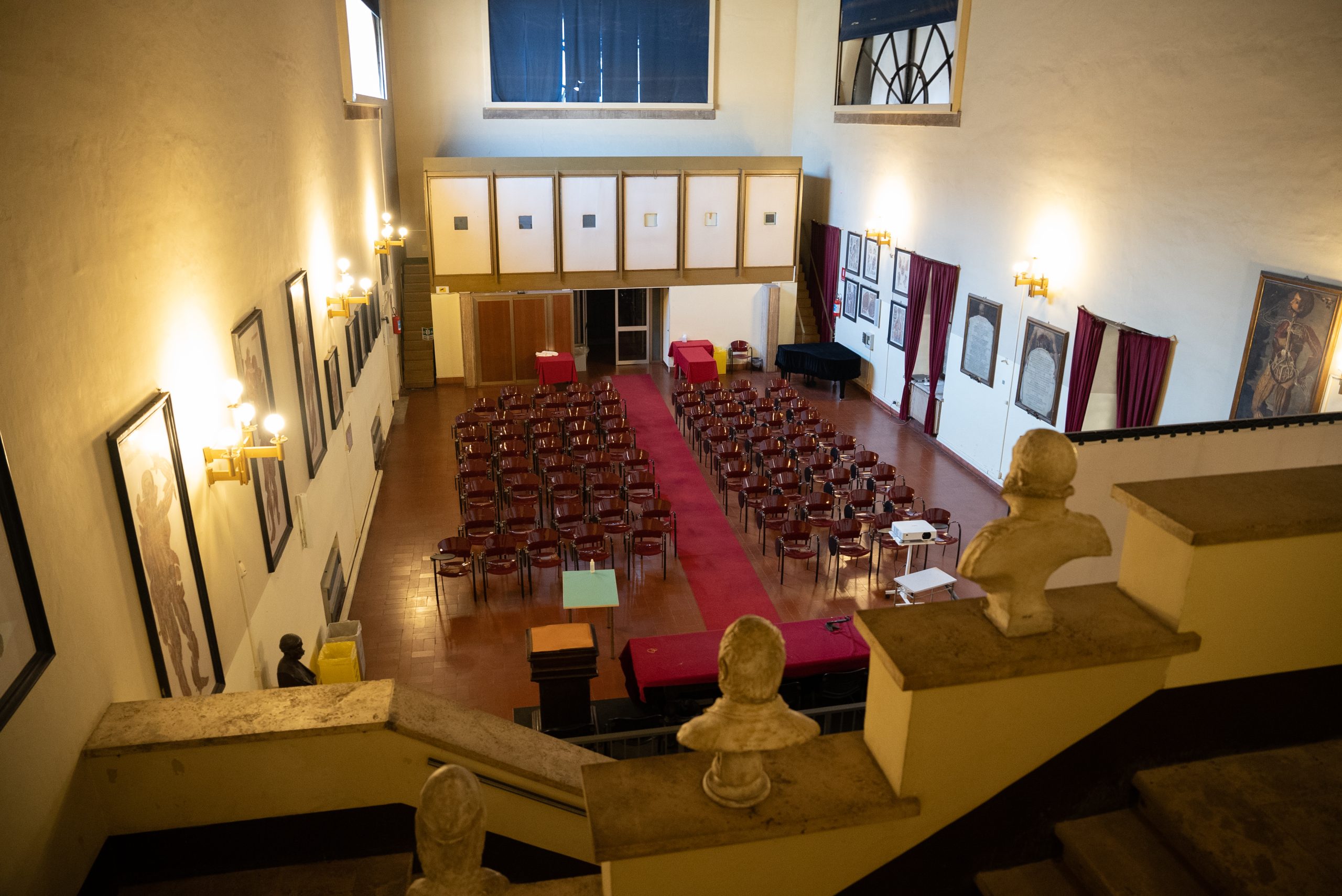
The building commissioned by Pope Alexander VII Chigi, formerly known as the Ospedaletto, represents the 17th-century expansion of Santo Spirito. It was constructed perpendicular to the 15th-century hospital, the Corsie Sistine, and faces the right bank of the Tiber. The Sala Alessandrina is accessed via a staircase in front of the large recessed portal. It is a spacious, rectangular hall, with a ceiling that still preserves its original wooden coffered structure. At the far end of the room, a monumental staircase adorned with plaster busts of renowned physicians rises symmetrically in a double flight, providing access to the upper floor. The Sala Alessandrina serves as an exhibition space for numerous graphic works by Antonio Serantoni from the 19th century, hand-colored anatomical plates, and several panel paintings that once belonged to the renowned physician Guglielmo Riva.
Sala Flajani
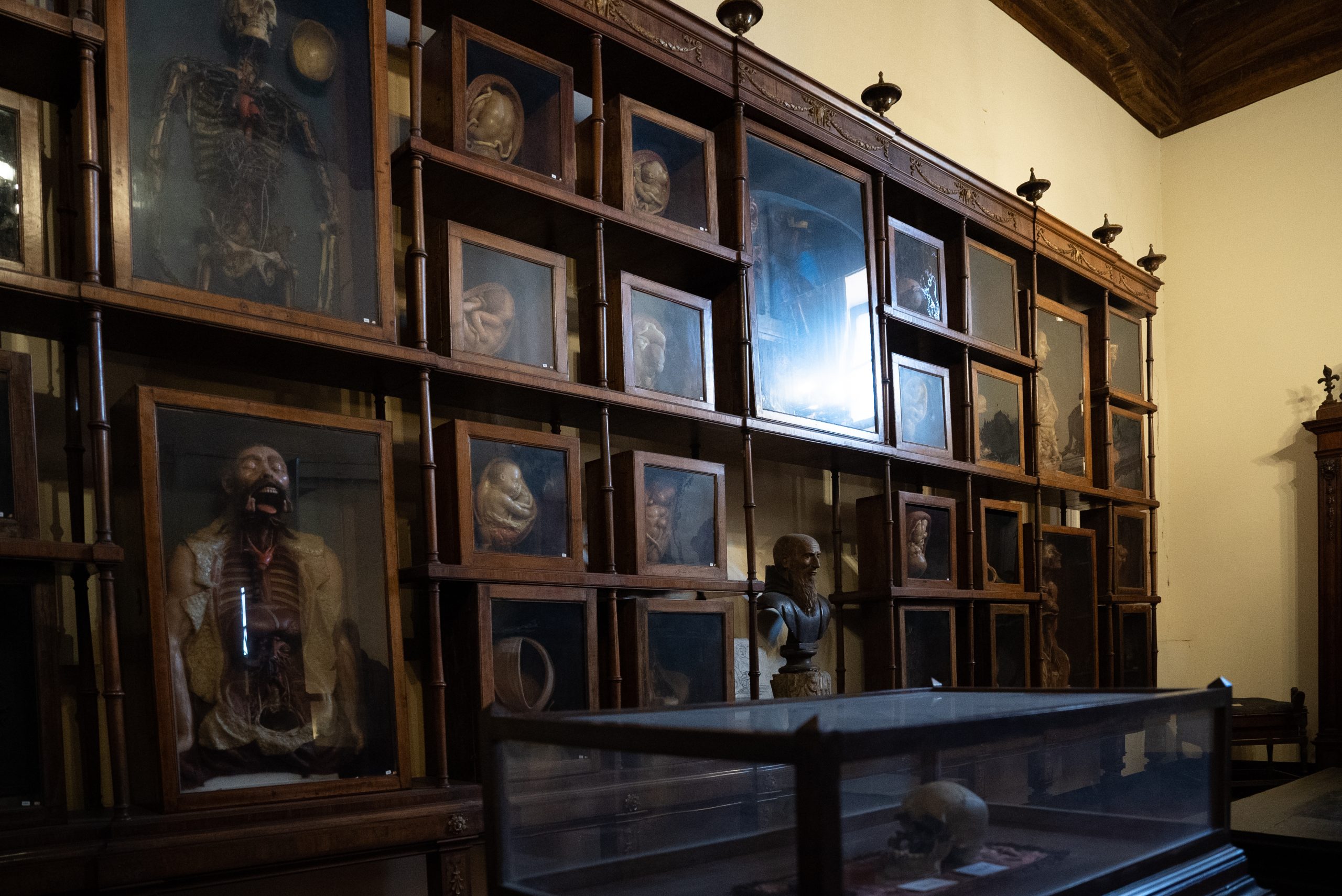
This small room preserves the surviving collection of the ancient Museo Anatomico del Flajani. It features an exhibition of obstetric anatomical wax models, late 17th-century anatomical specimens preserved both dry and in liquid, and pathological preparations from various periods. The artifacts are displayed on the original 18th-century walnut shelves. Inside the room, there is also an 18th-century wooden structure known as the Tempietto per la china and a 16th-century wooden chest, originally used to store spices, including cinchona bark.
Sala Capparoni
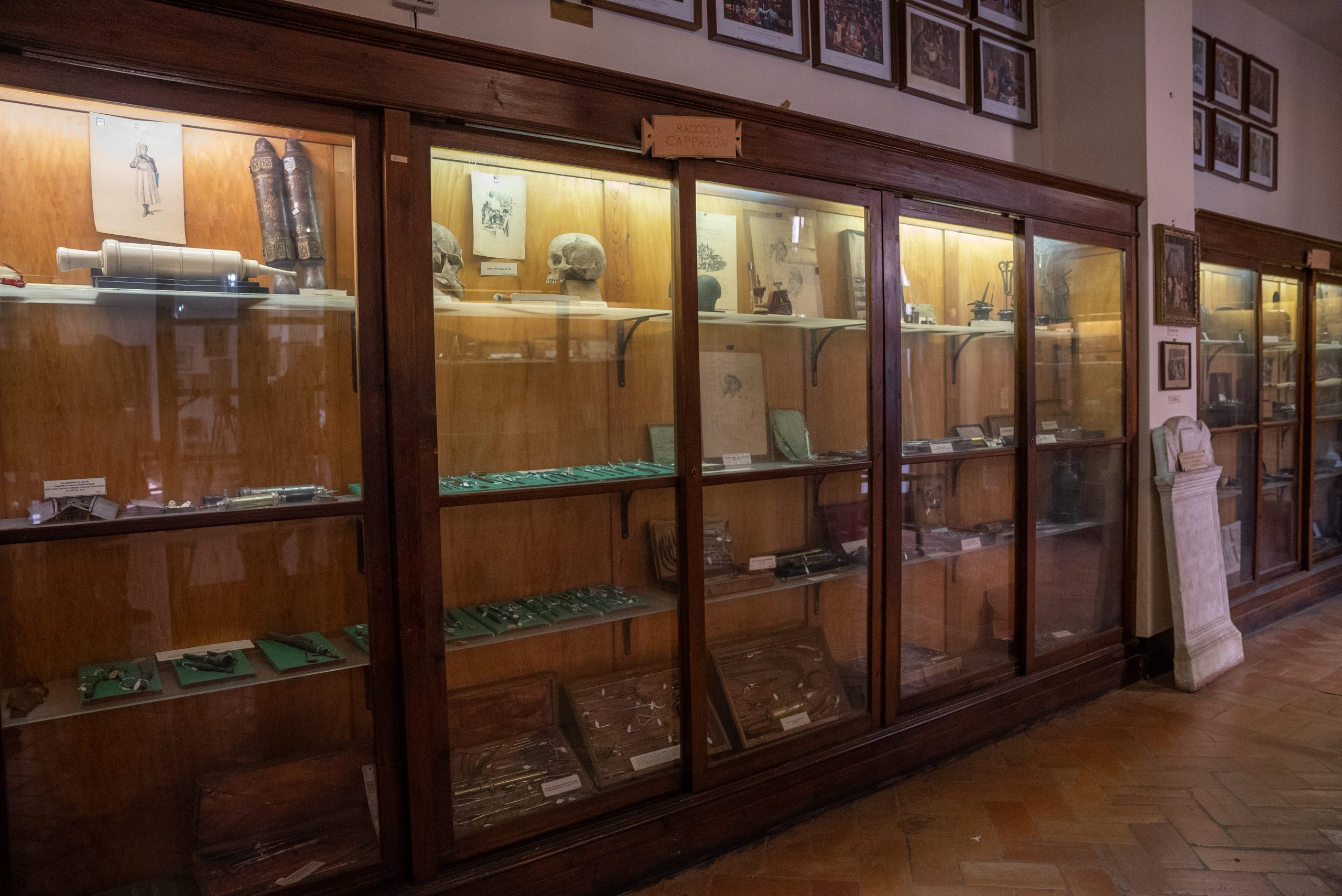
The Sala Capparoni houses a highly diverse collection. Among its many artifacts, the collection of ex-voto wax offerings stands out, with pieces ranging from modern times to Etruscan, Roman, and Greek origins. Other notable exhibits include the “unicorn horn” (actually the tooth of a narwhal), portable pharmacies from the 17th to 19th centuries, a collection of ancient glass and ceramic pharmacy containers, and a 19th-century electrotherapy machine.
Sala Carbonelli
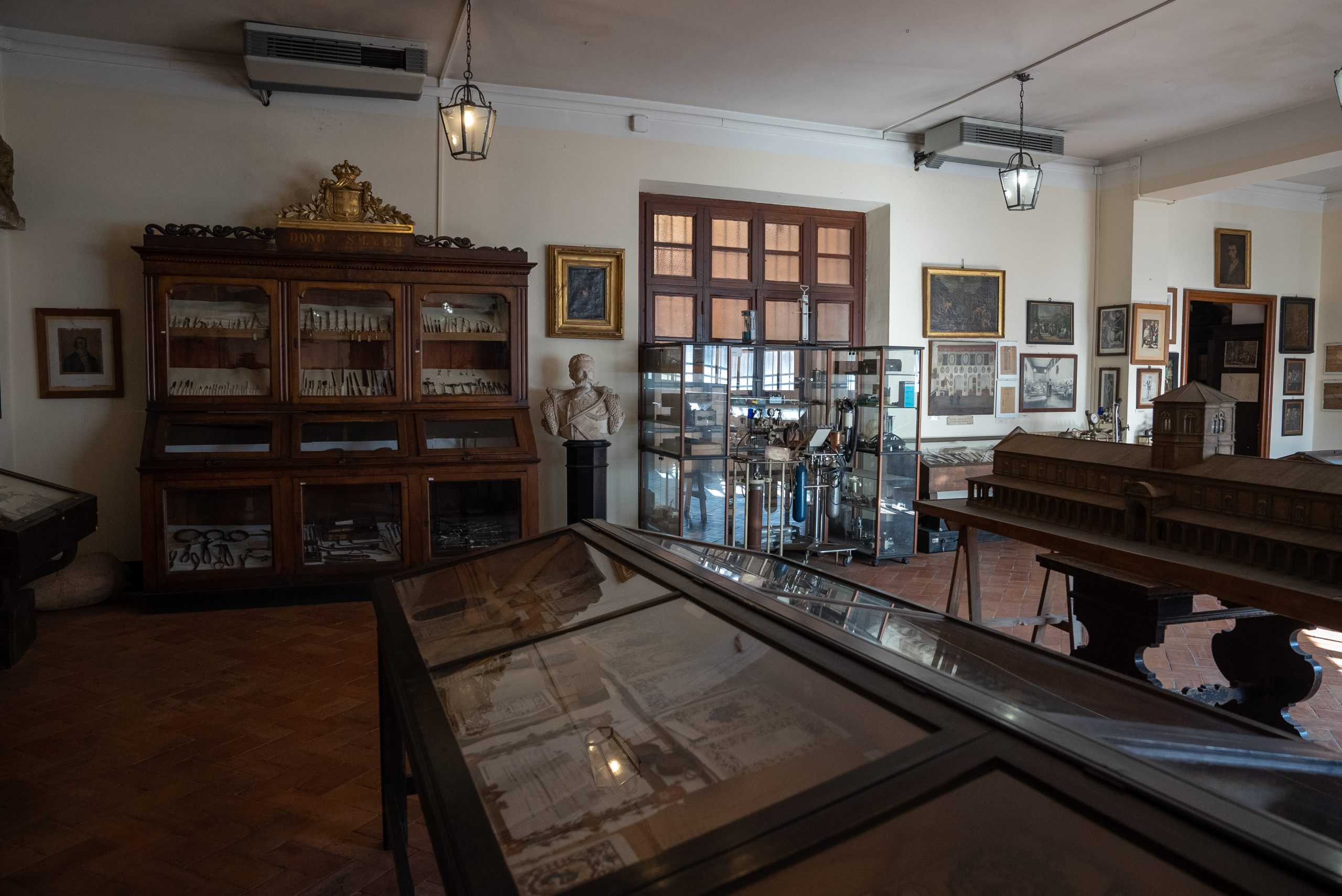
The Sala Carbonelli houses numerous artifacts from the collection of Giovanni Carbonelli. Additionally, on display in the room are the cattedra (teaching chair) of Lancisi, a 17th-century pharmacy press, and materials from the retrospective exhibition at Castel Sant’Angelo. A large glass case preserves a 19th-century dry anatomical preparation depicting the central and peripheral nervous systems. Along the walls, display cabinets contain objects related to surgical and obstetric practices, while in the center, a series of cases hold a small collection of herbals and medical diplomas. On another wall, a cabinet surmounted by the coat of arms of the House of Savoy showcases a field surgical kit once belonging to King Victor Emmanuel II.
Reconstruction of an Ancient Pharmacy
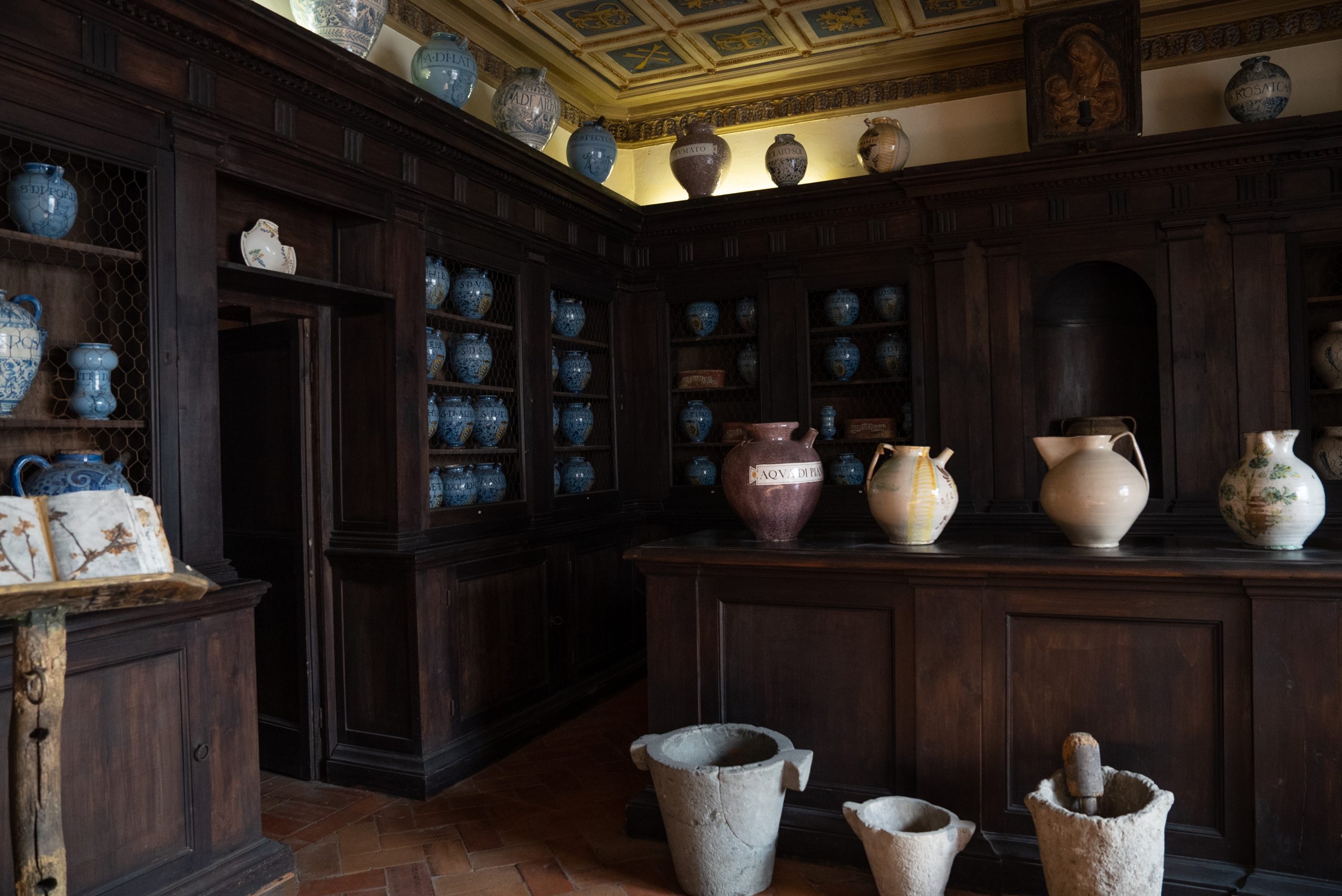
The reconstruction of the ancient pharmacy originates from the 1911 retrospective exhibition at Castel Sant’Angelo. The scenographic display of antique ceramics on a specially crafted wooden shelving unit showcases a collection of ceramics (16th–19th centuries), including orcio jars, albarelli, and mortars of various designs. These pieces primarily come from the apothecary of the Ospedale Santo Spirito and from the hospitals of the former Pio Istituto di Santo Spirito.