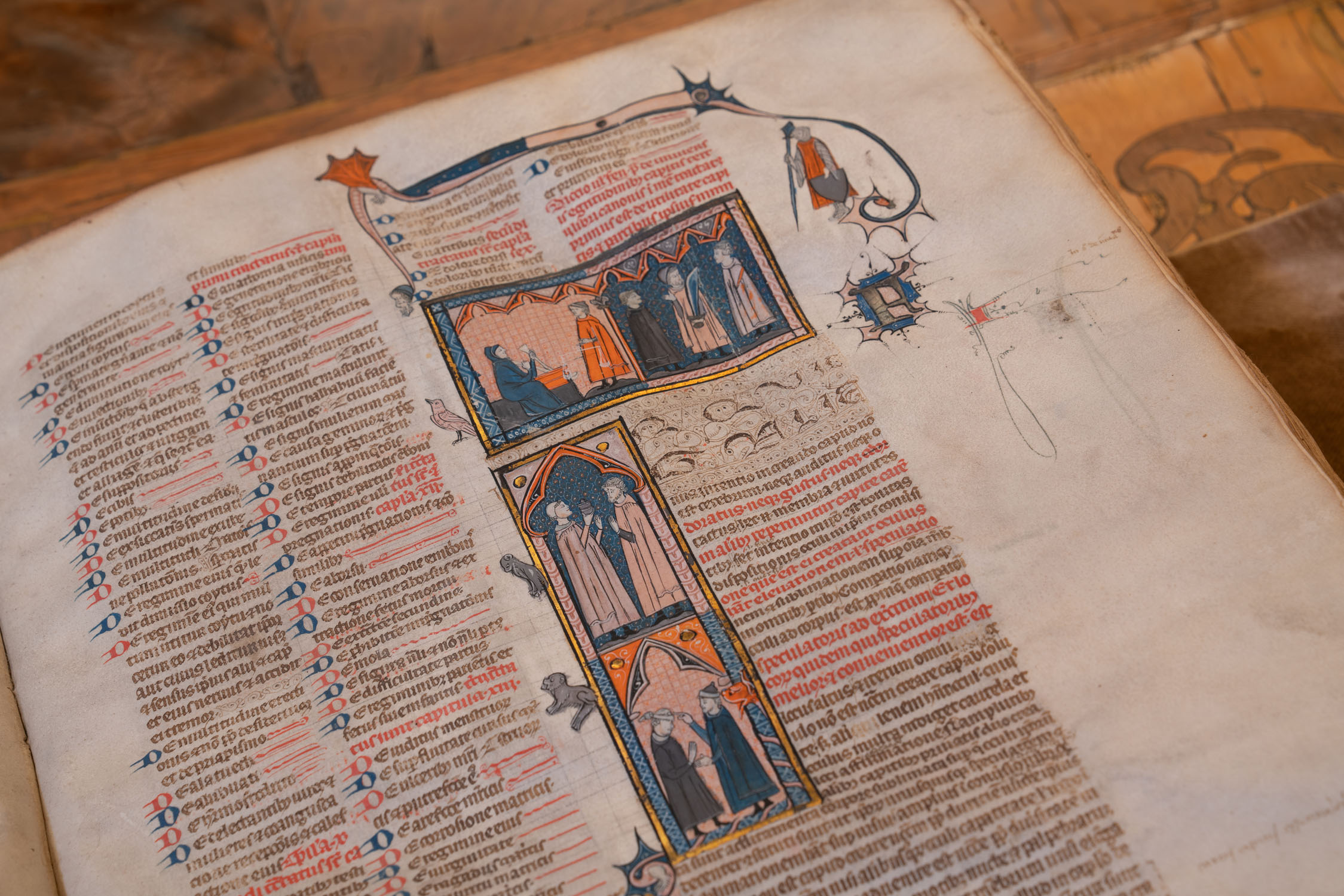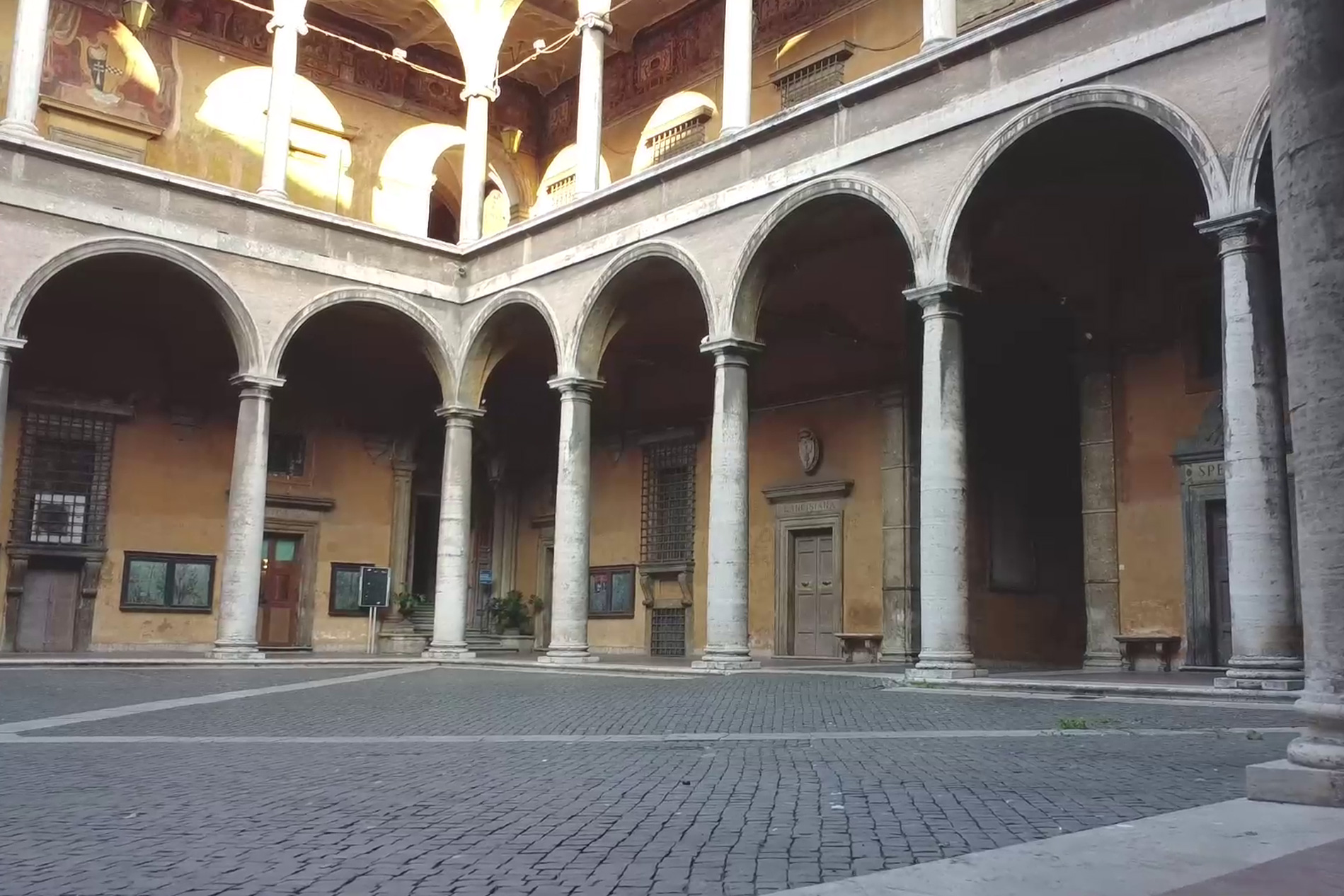
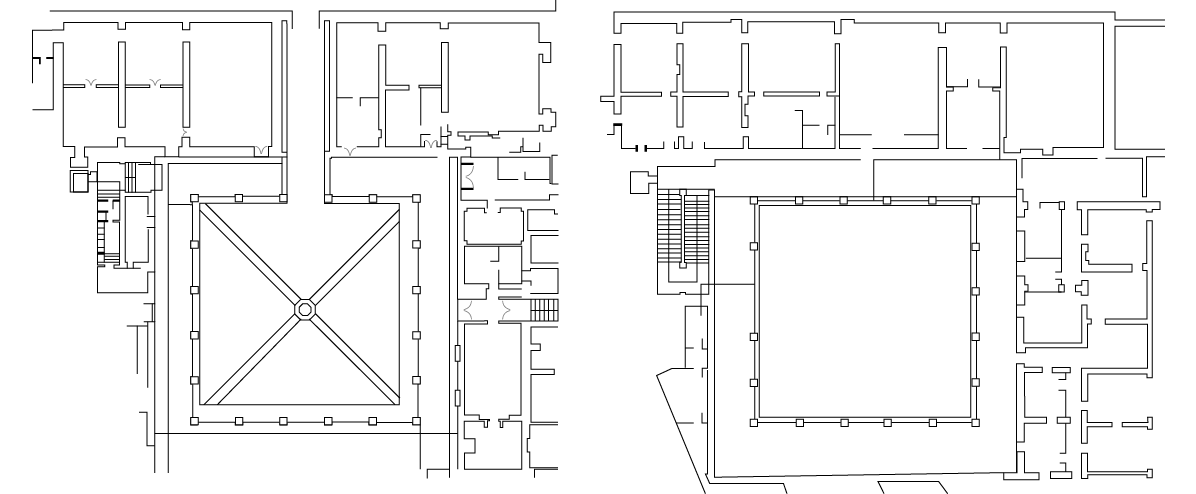
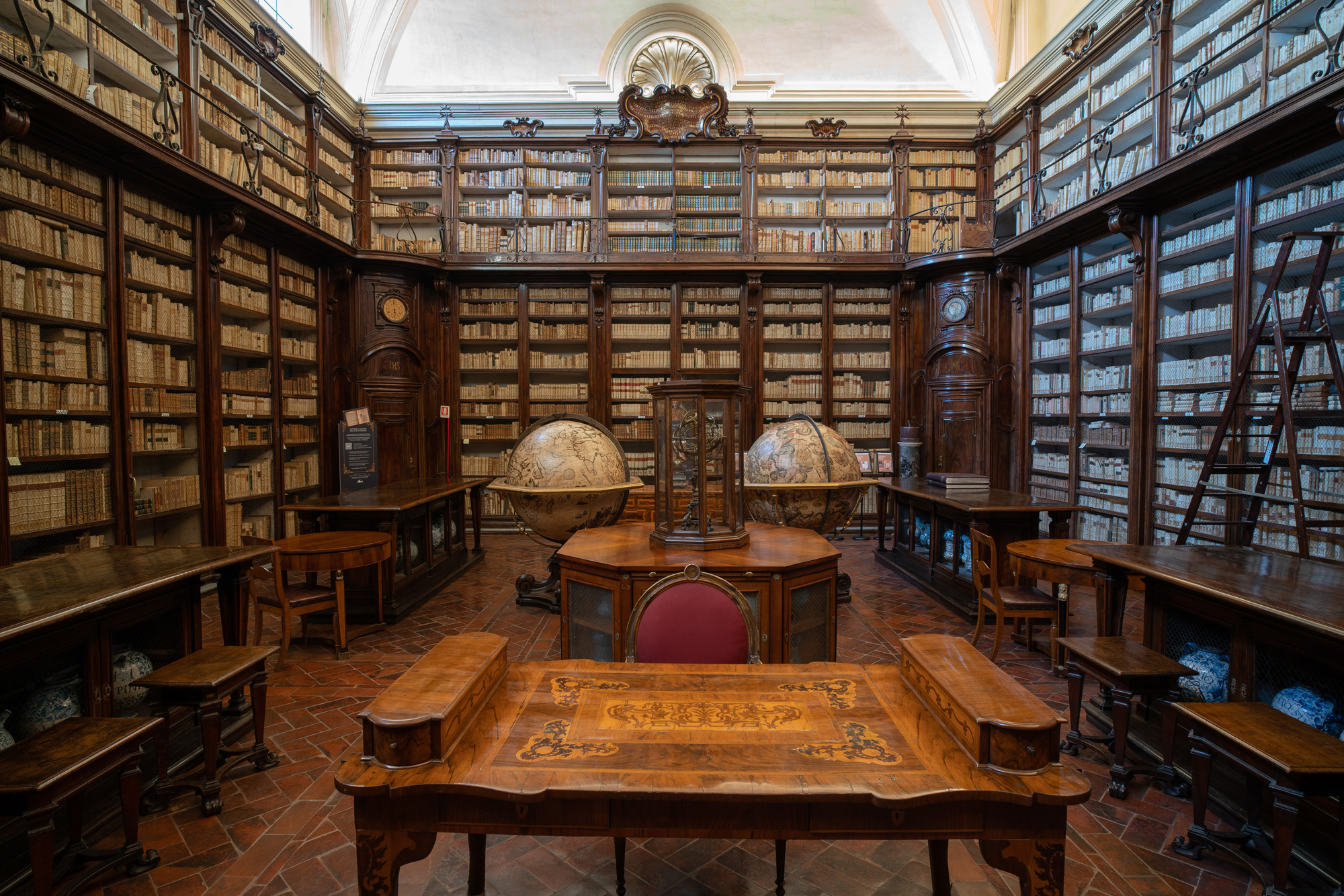
The Lancisiana Library, founded in 1714 by Giovanni Maria Lancisi (1654–1720), papal physician, was established under the papacy of Clement XI for young medical trainees. Originally the residence of the Preceptors of the Sacred Hospitaller Order, it was transformed into its current form thanks to Commendatore Sinibaldo Doria (1664–1733) and architect Tommaso Mattei (1652–1726). The building houses marble artworks dating from the 5th to the 17th century. Owned by ASL Roma 1, the library was reopened to the public in July 2021 following an extensive conservation restoration. Its collection, divided into three sections, includes 20,000 volumes, among which are 375 manuscripts, 1,628 books printed in the 16th century (cinquecentine), and approximately 60 incunabula. Among its most significant holdings are the illuminated manuscript Liber fraternitatis Sancti Spiritus in Saxia de Urbe (15th century) and an illuminated manuscript of Avicenna (13th century). Specialized in the History of Medicine and Science, the library participates in the National Census of Manuscripts and Cinquecentine.