
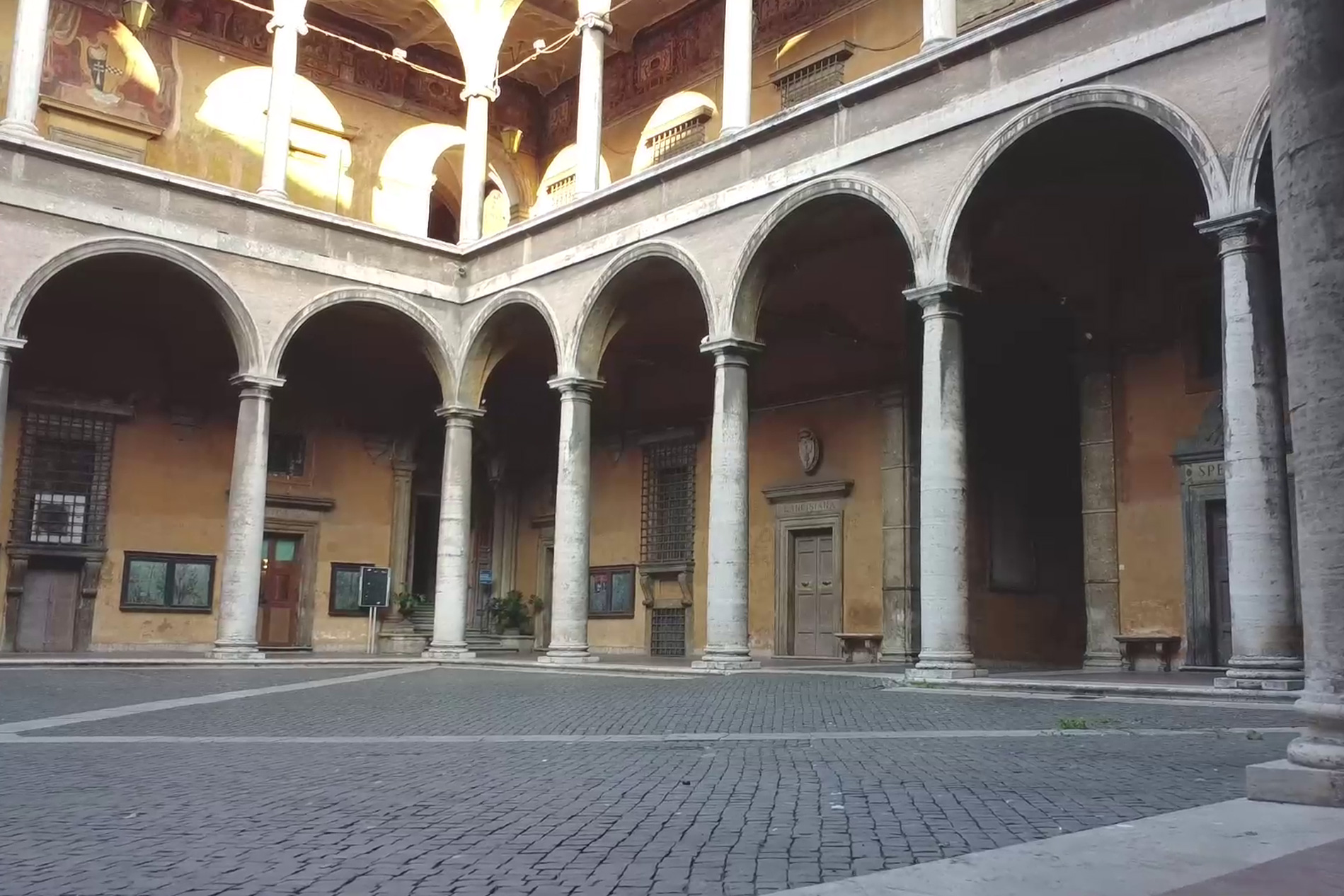
The Accademia Lancisiana of Rome was founded by Giovanni Maria Lancisi, pontifical physician, on April 2, 1715. Over time, it was transformed and renamed several times as the Accademia Giacintina, the Assembly of Friends of Medical-Surgical Science, the Association of the Young Health Family of the United Hospitals of Rome, and the Lancisiana Society of the United Hospitals of Rome. It was finally established as a legal entity under its original name by royal decree on June 27, 1935, no. 1363. 1363. In 1940, the Academy moved from the Ospedale della Consolazione back to its original seat, the Ospedale Santo Spirito, in the Palazzo del Commendatore. Among its holdings is a precious Library whose collection includes volumes (from the 16th to the 19th century), almost all related to medical or scientific topics.
Points of interest
The Library of the Accademia Lancisiana
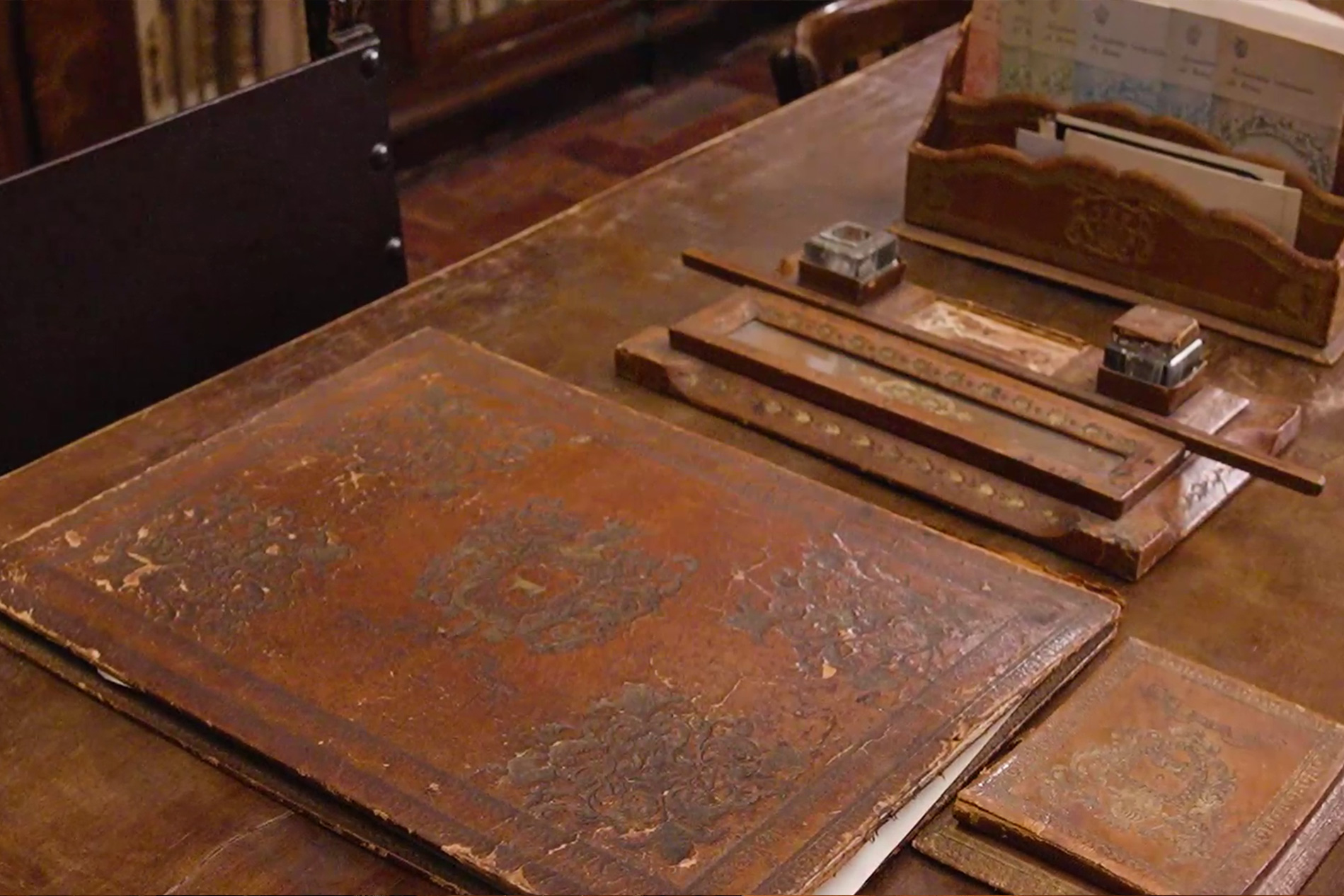
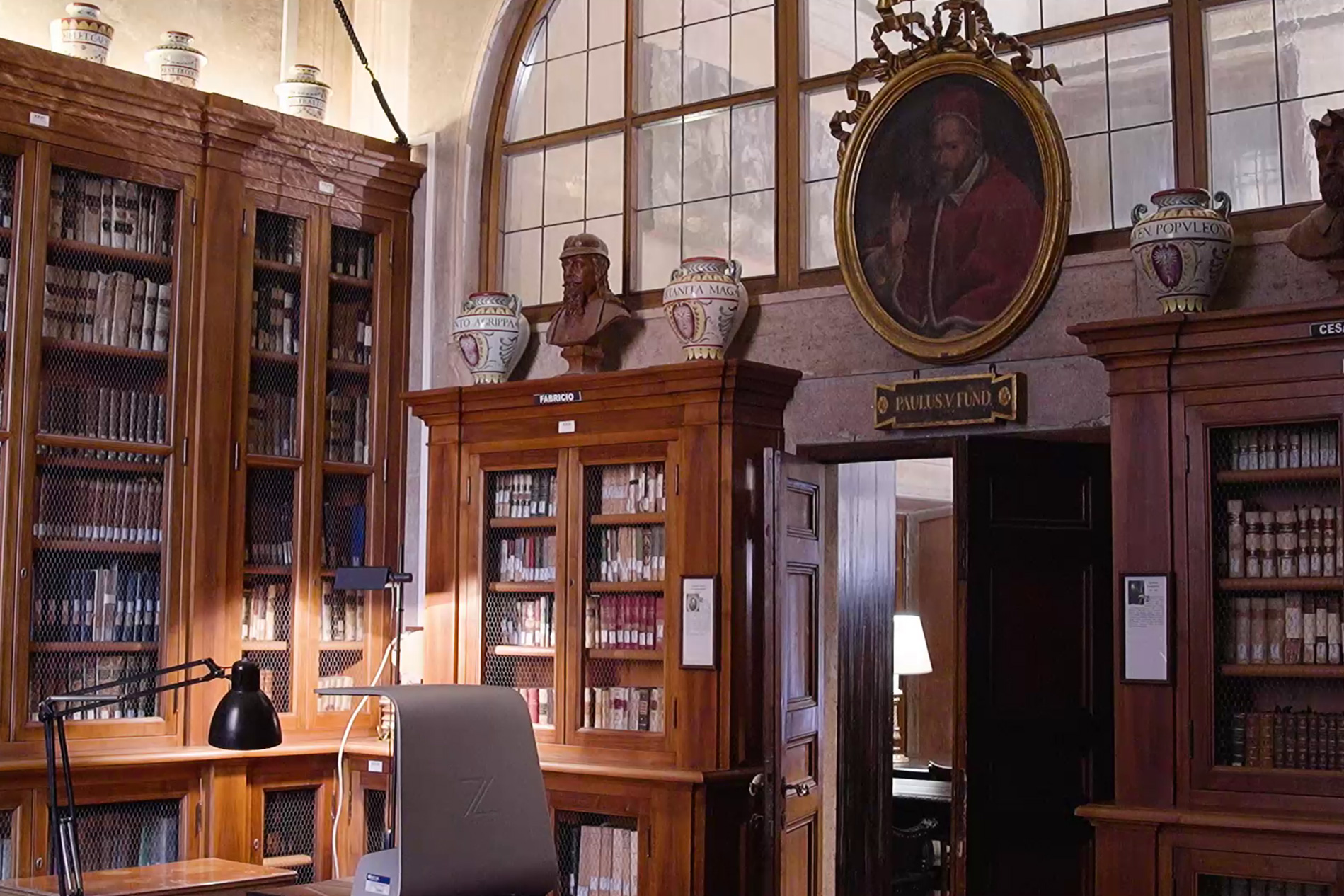
The Library of the Accademia Lancisiana occupies three rooms within the Academy. The second room is also used as the office of the President. The large wooden bookcase was commissioned by Deputy Pietro Pericoli in 1882.The ancient shelving is decorated at the top with terracotta busts of ten of the most famous surgeons and anatomists of the past: Hippocrates, Galen, Valsalva, Morgagni, Fallopius, Cesalpino, Fabricius of Acquapendente, Malpighi, Vesalius, and Aselli. At the top, part of a collection of 19th-century pharmaceutical ceramics from the old Pharmacy of the Ospedale Santo Spirito is on display. The Library’s holdings include around 13,500 volumes mainly focused on medical and scientific subjects, along with a limited number of works in literature, philosophy, religion, and law (16th–20th centuries). The collection is divided into two main sections: the Consolazione collection and the Lancisiana collection. The largest part comes from the Hospital of Santa Maria della Consolazione, which was closed at the end of the 1930s. The smaller part comes from Lancisi’s personal collection, originally housed in the Lancisiana Library. Above the door to the reading room hangs a portrait of Pope Paul V giving his blessing, painted by an unknown artist in the 16th century.
Conference Room
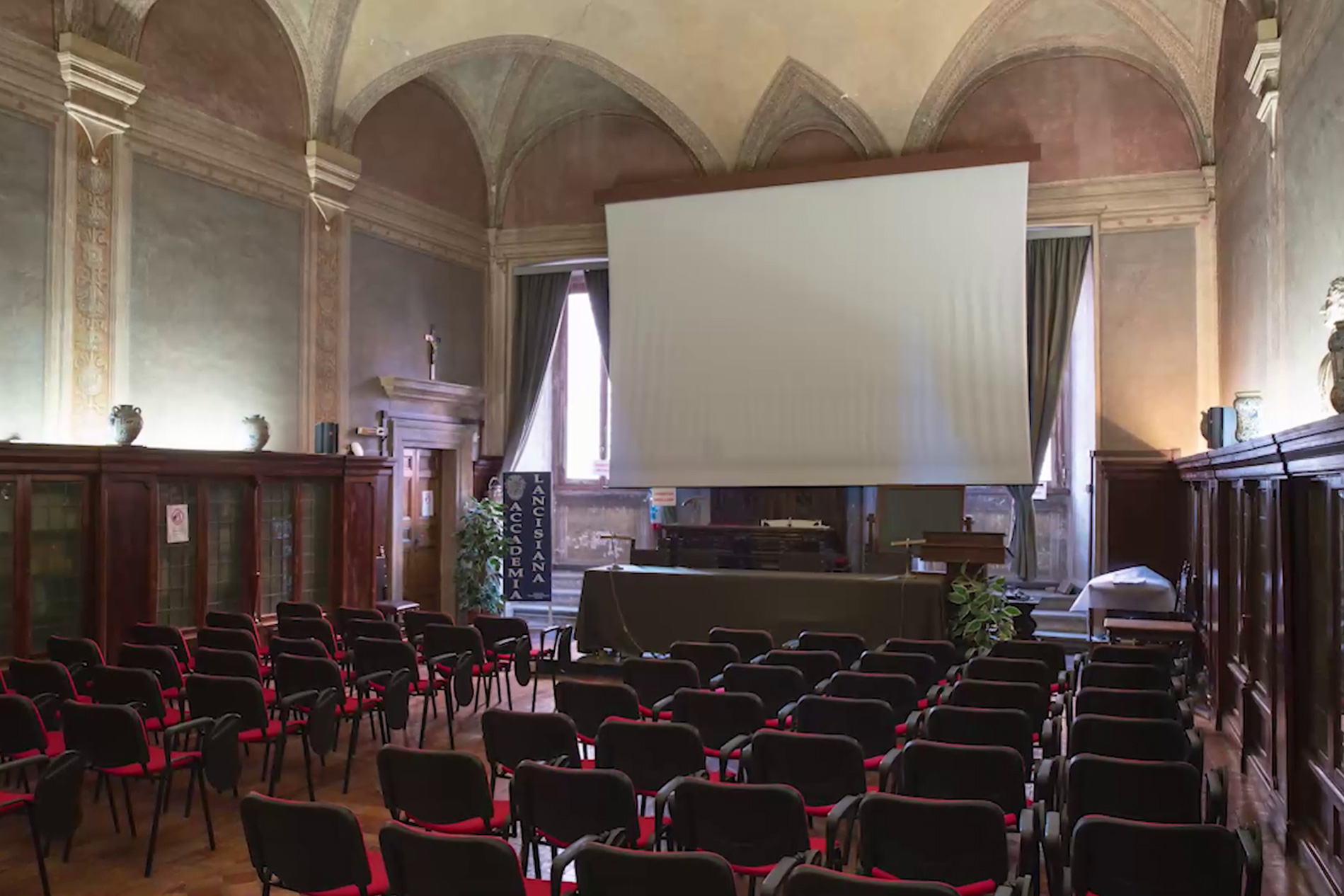
The large rectangular hall was once used by the Minor Commission of the Reverenda Fabbrica di San Pietro, chaired by Virgilio Spada and attended by Bernini, for the construction of the colonnade of St. Peter’s Basilica. Today, the hall serves as a conference room and is furnished with an old wooden lectern, a large table, and two inlaid wooden sideboards-bookcases (late 19th century) which hold the periodicals archive. On top of the bookcases is a display of pharmaceutical ceramics (17th–19th centuries), originating from the pharmacies of the united hospitals of the Pio Istituto di Santo Spirito, along with a plaster copy of the marble bust of Giovanni Maria Lancisi, whose original is kept in the Lancisiana Library.
Entrance Hall and Presidency
he entrance hall of the Academy was originally used as a cloakroom. Covered by a barrel-vaulted ceiling, it now serves as a corridor that gives access to the Library, the Presidency, and the Conference Room. The door to the presidency is crowned by the coat of arms of the Pio Istituto and United Hospitals of Rome (a cross with two intersecting arms and a dove representing the Holy Spirit).Also visible are: an oil painting on canvas portraying Cardinal Antonio Maria Salviati (Roman school, 16th century), an 18th-century epigraph with a citation of Lancisi, and a 19th-century epigraph dedicated to Biagi.There are also two large photographs showing in detail some scenes from the frescoes in the Salone del Commendatore.