
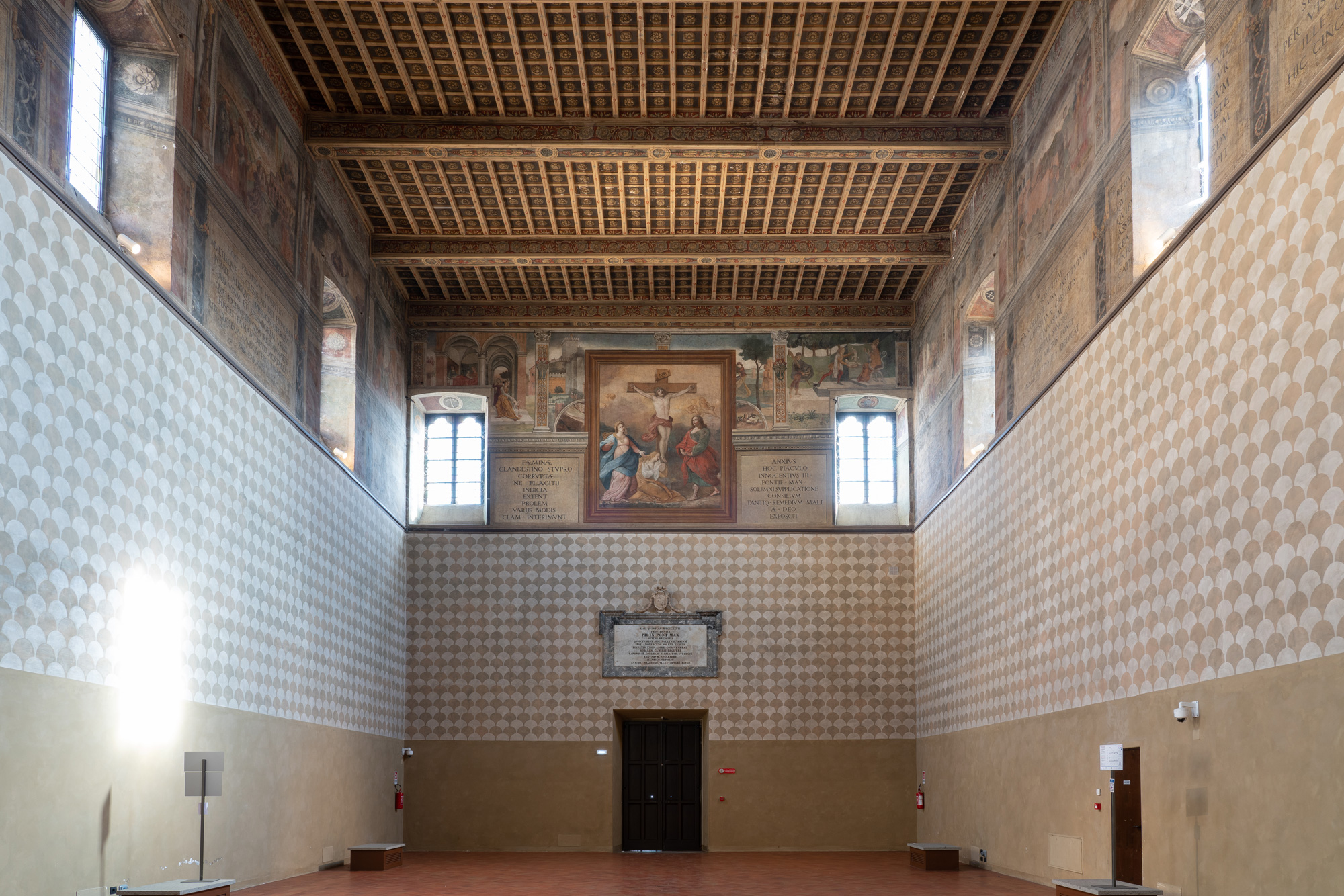
Stretching 120 meters in length, 13.5 meters in width, and 12 meters in height, the current wards—dedicated to Giorgio Baglivi and Giovanni Maria Lancisi, two distinguished physicians who played a crucial role in the life of the hospital—date back to the reconstruction commissioned by Sixtus IV in 1474. As part of the renewal of Rome, the pope entrusted the project to renowned architects such as Andrea Bregno, Baccio Pontelli, and Giovannino de Dolci, who were already engaged in Sistine construction sites, and assigned the decoration to painters from the Umbrian-Lazio-Marches school. Built in a short time, the hospital became a model of care and a beacon for medicine across Europe.
The Baglivi Wing, the first one encountered when entering from the east portico, marks the beginning of the upper frescoes that illustrate the history of the hospital's construction. Like a comic strip, the narrative unfolds in a continuous loop along the perimeter of the wards, recounting the lives and deeds of the two main founders of the hospital—Innocent III, of the Conti di Segni family, and Sixtus IV, of the Della Rovere family—ultimately returning to the very room where it began.
Points of interest
Overview of the Wards
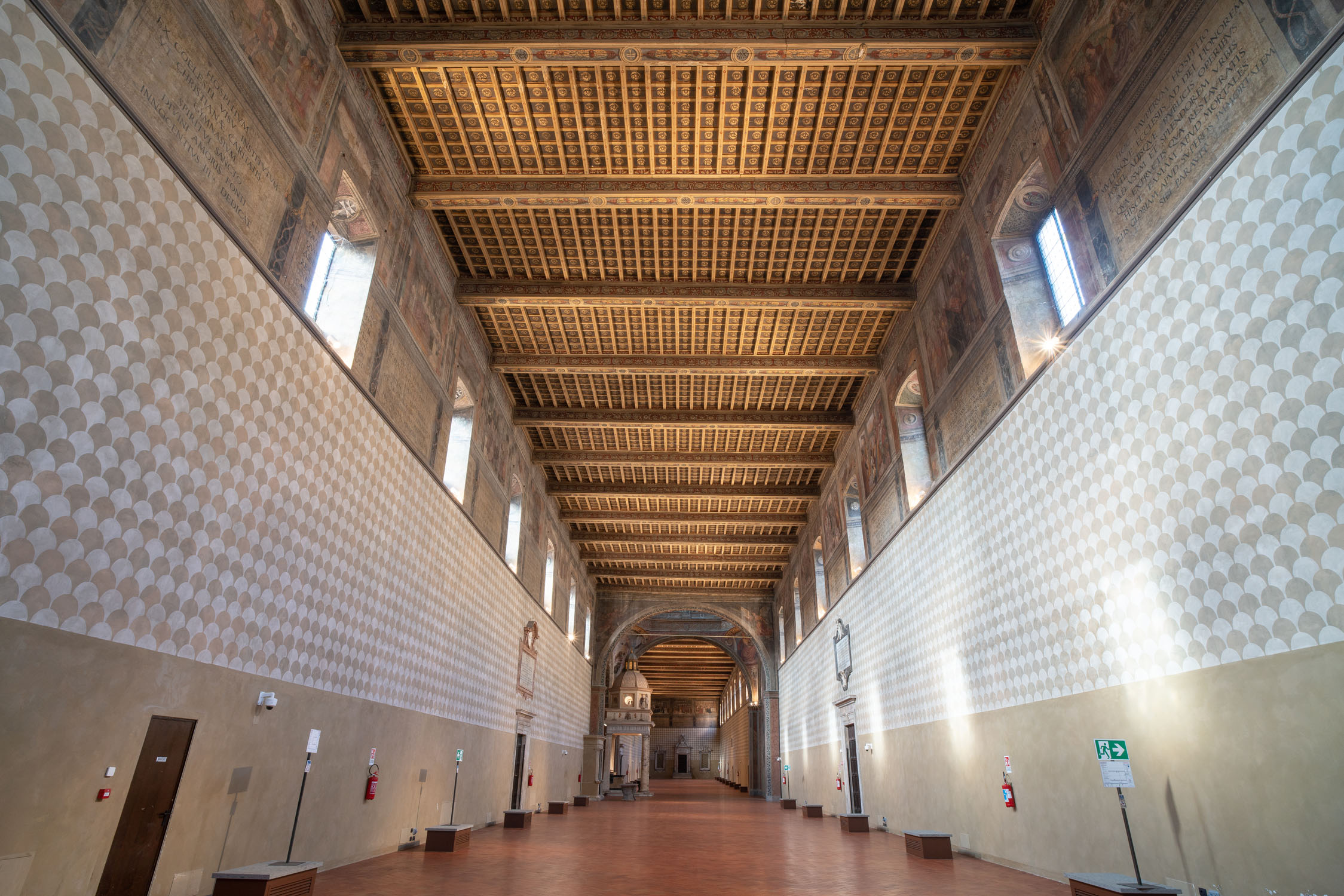
The wards consist of two wings, separated by a central lantern tower. Large windows were evenly placed at the top of the walls along the entire perimeter of the halls to provide light and ventilation to the vast space without disturbing the patients, who rested in canopy beds. The coffered ceiling is adorned with friezes interspersed with the hospital’s coat of arms—the double-barred cross—which was reproduced during 19th-century restorations based on the original designs.
Pictorial Decoration of the Wards
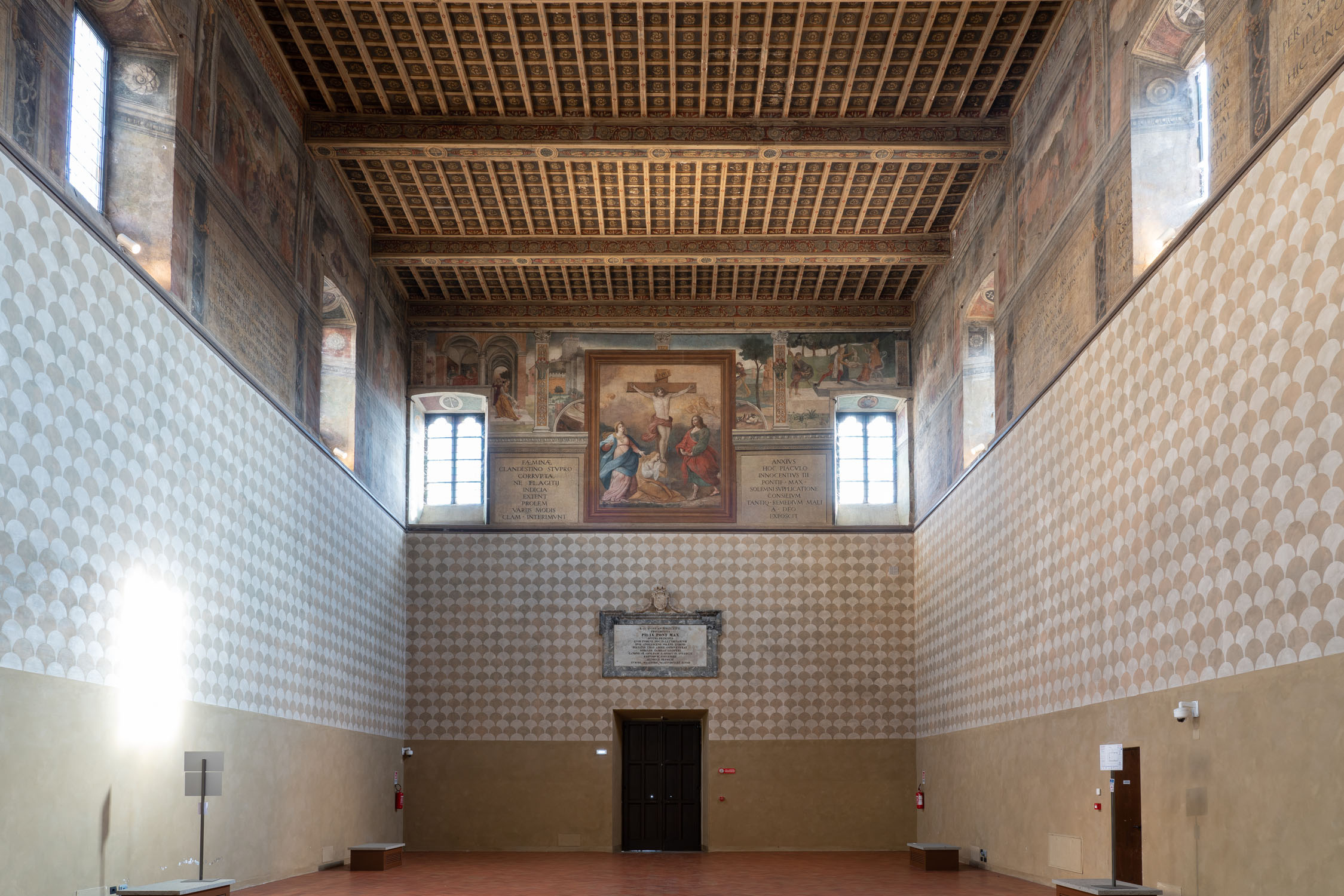
The frescoes—comprising 46 main panels and 23 smaller ones—were painted by anonymous artists from the Umbrian-Lazio-Marches schools at the end of the 15th century. They extend over approximately 1,200 meters and rise about 8 meters above the floor, following the entire perimeter of the wards. The scenes, framed by painted pilasters adorned with candelabra motifs, depict the most significant episodes from the lives and works of the two founding popes, Innocent III and Sixtus IV. Below each panel, Latin captions by Bartolomeo Sacchi, known as Platina, provide explanations. In the 16th century, Commander Teseo Aldrovandi had the walls of both wings covered with precious tooled leather hangings, which have since been lost.
Counter-Façade: The Dream of Innocent III
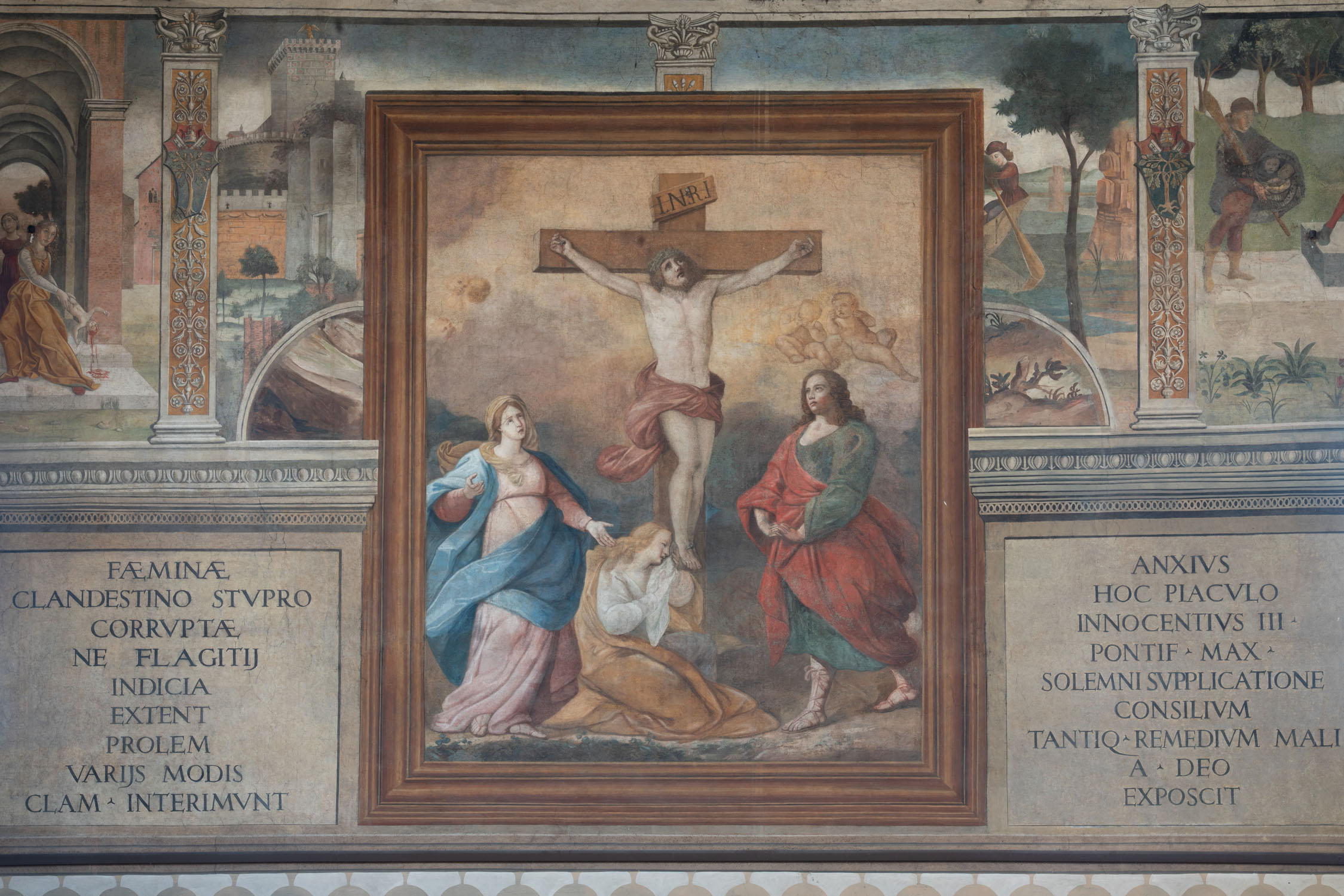
The legend surrounding the hospital’s foundation at the end of the 12th century tells of a terrifying dream experienced by Pope Innocent III: in the Vatican area, some fishermen discover numerous lifeless bodies of newborns in the waters of the Tiber, thrown into the river by their own mothers. Reverently, the fishermen present them to the pope, who, deeply moved and horrified, turns away from the dreadful vision. The central panel, by an unknown artist, partially covering the original scene of the macabre catch, was added in the 18th century to soften the horror that the image might have provoked in the hospital’s patients.
The Works of Innocent III
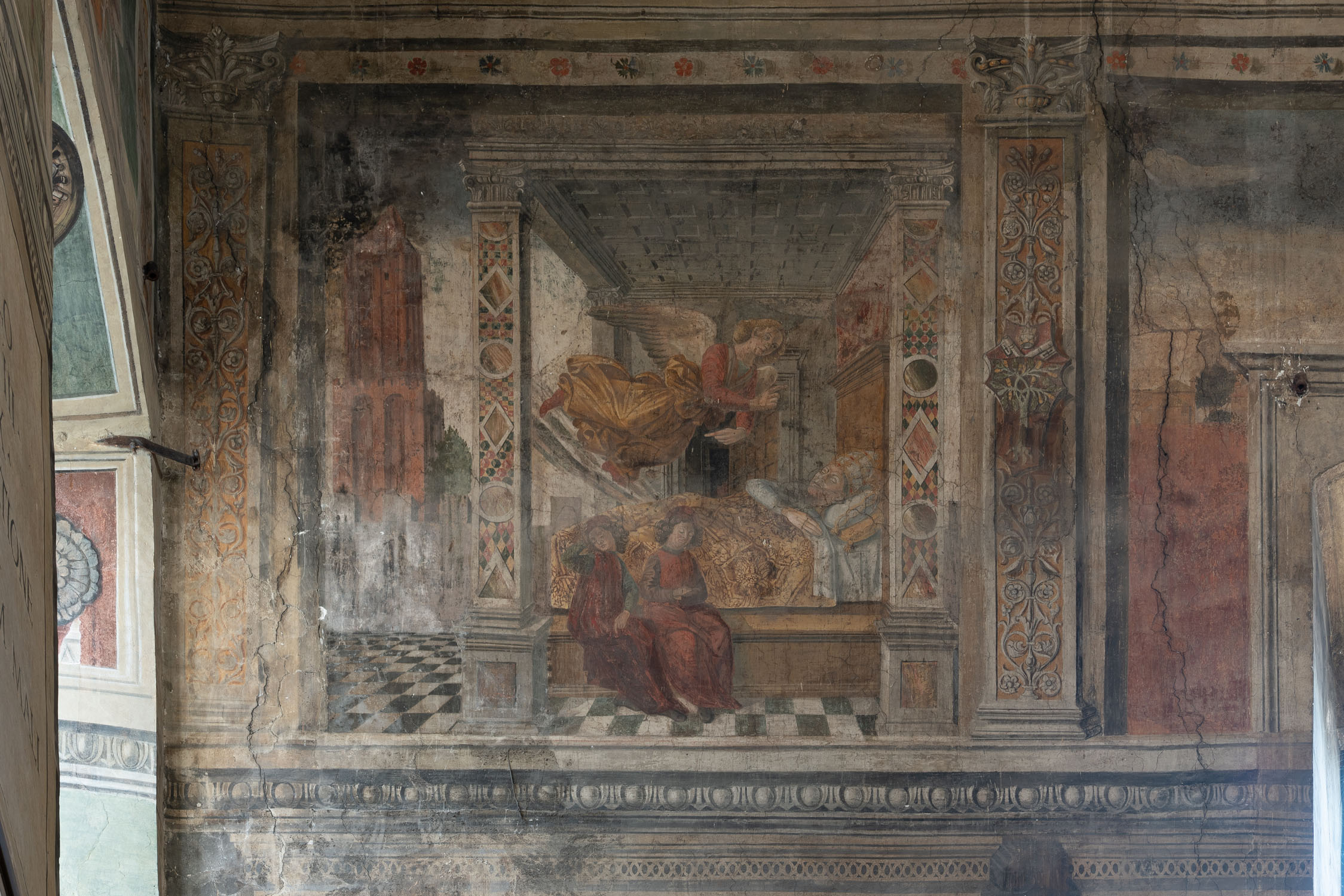
The grim reality of the time unfortunately confirmed this cruel practice, prompting the pope to build an institution to shelter abandoned children, the poor, and solitary women, while also providing free medical care for all. In a dream, an angel directed the pope to construct the hospital on the site of the former Schola Saxonum, which was still owned by King John Lackland, who then donated it to him. Named Santa Maria in Sassia, the hospital’s charitable and welfare mission was based on the rule set forth in the Liber Regulae, of the Hospitaller Order of the Holy Spirit, founded by Guido of Montpellier, its first master. The rule stated: “The patient is the master, and the doctor is his servant.” This principle quickly spread throughout Europe and was adopted by many hospitals.
The Childhood and Youth of Francesco della Rovere
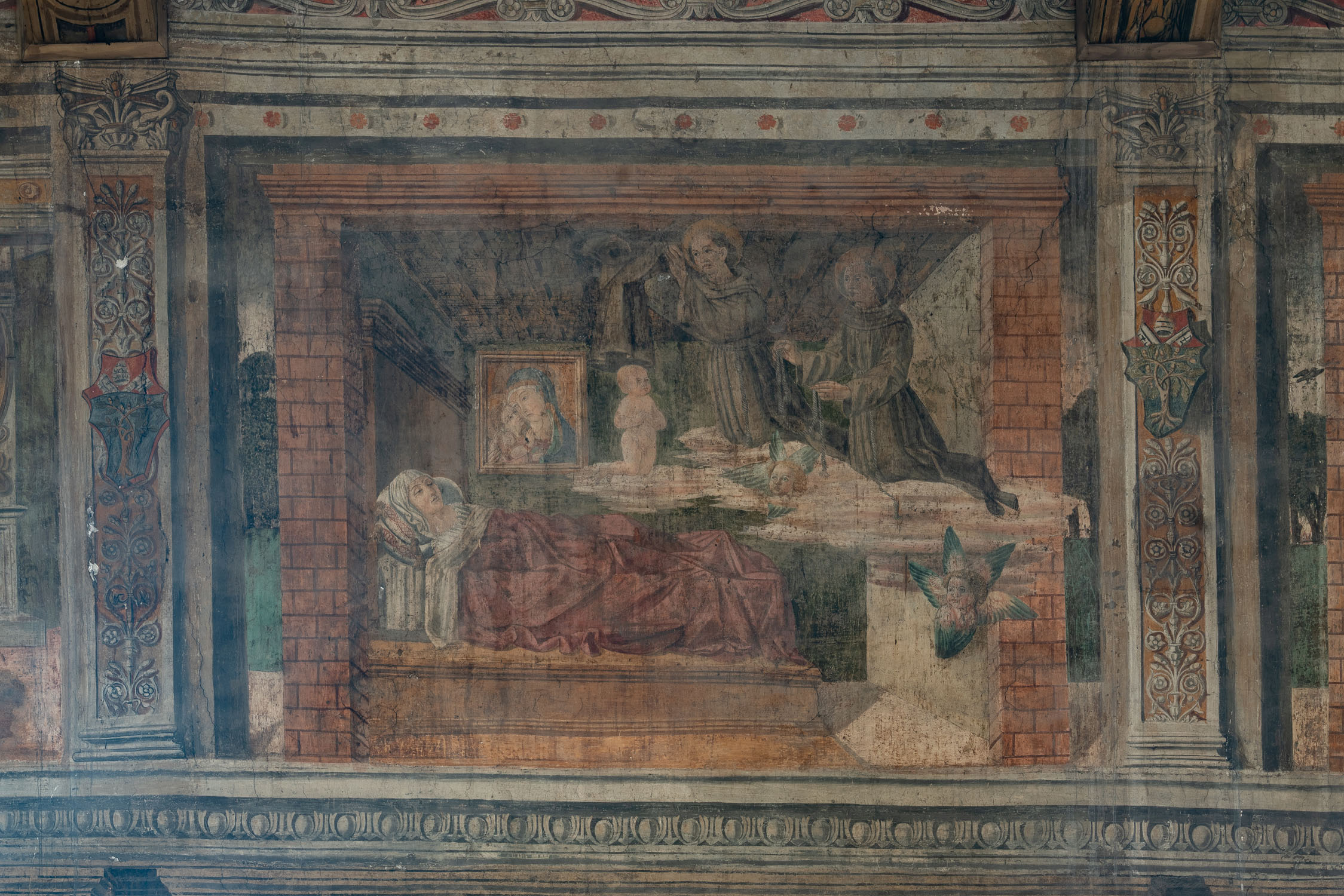
The first panel depicting the life of Francesco della Rovere shows his mother, Luchina, who, on the verge of giving birth, has a vision of Saints Francis and Anthony. They present her with the Franciscan habit and cord, foretelling the child’s destiny. The following scenes illustrate Francesco’s birth, his baptism, and the moment when his mother makes a vow to Saint Francis, promising to dress her son in the Franciscan habit in exchange for his intercession to heal the child from an illness. She renews this vow after another fainting episode. Finally, the young Francesco, having fallen into the sea from the cliffs of Savona, is miraculously saved by Saints Francis and Anthony—an episode attributed to Melozzo da Forlì. Above the panels, the figures of Isaiah and another prophet are depicted.