
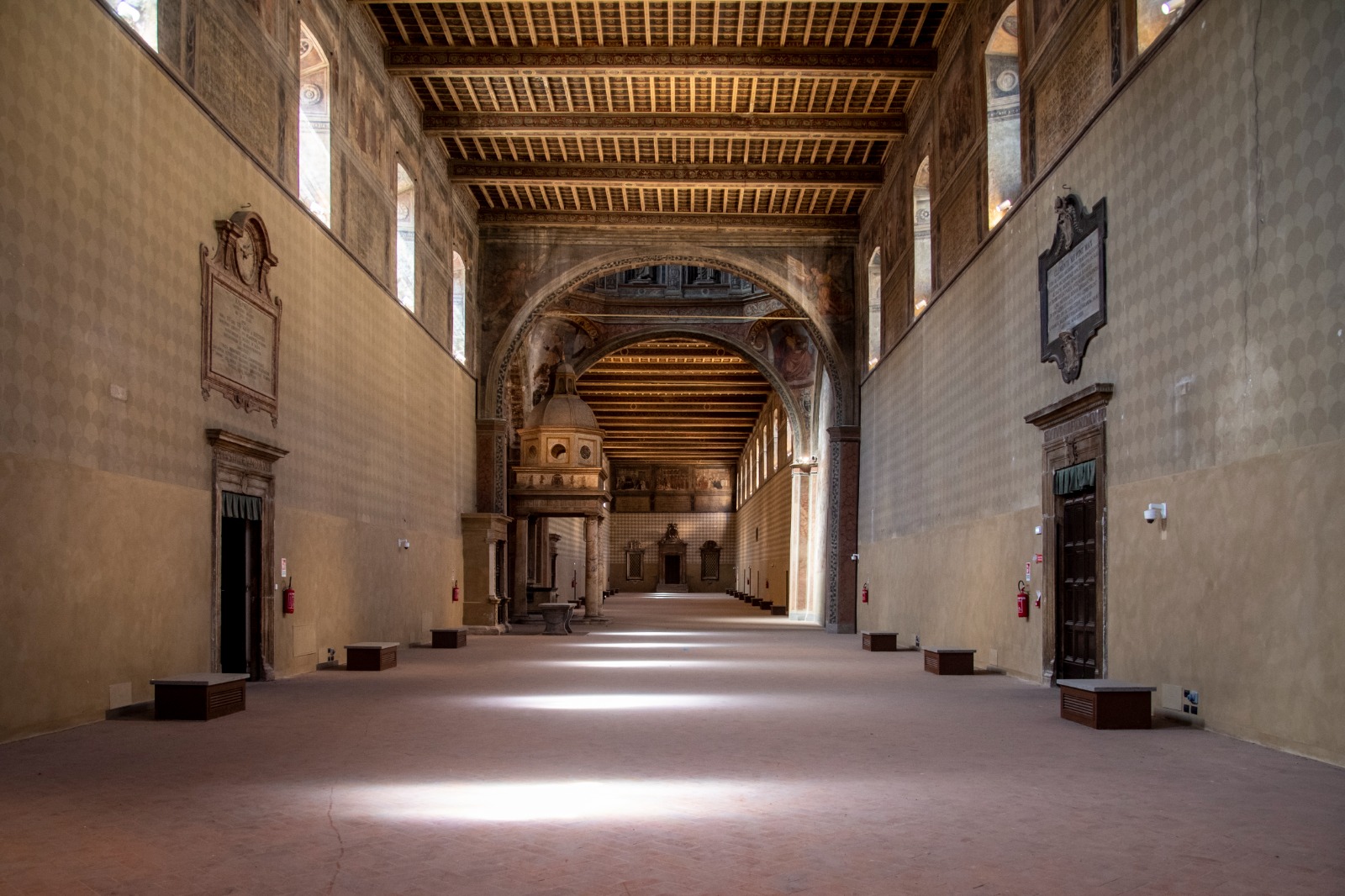
Following the demolition of the Benedictine ward—which extended the current Wards along the banks of the Tiber—for the construction of the embankment walls in 1926, the old façade of the Hospital was restored to its 15th-century appearance. This restoration was guided by a few surviving architectural elements from that period and by the fresco painted by Sandro Botticelli in the Sistine Chapel, The Cleansing of the Leper. The entrance is preceded by an arched loggia, on the floor of which is depicted the emblem of the Order of the Hospitallers of the Holy Spirit: the Cross of Lorraine surmounted by the dove of the Holy Spirit, made with colorful majolica tiles.
Points of interest
The Majolica Tiles of the Santo Spirito Coat of Arms
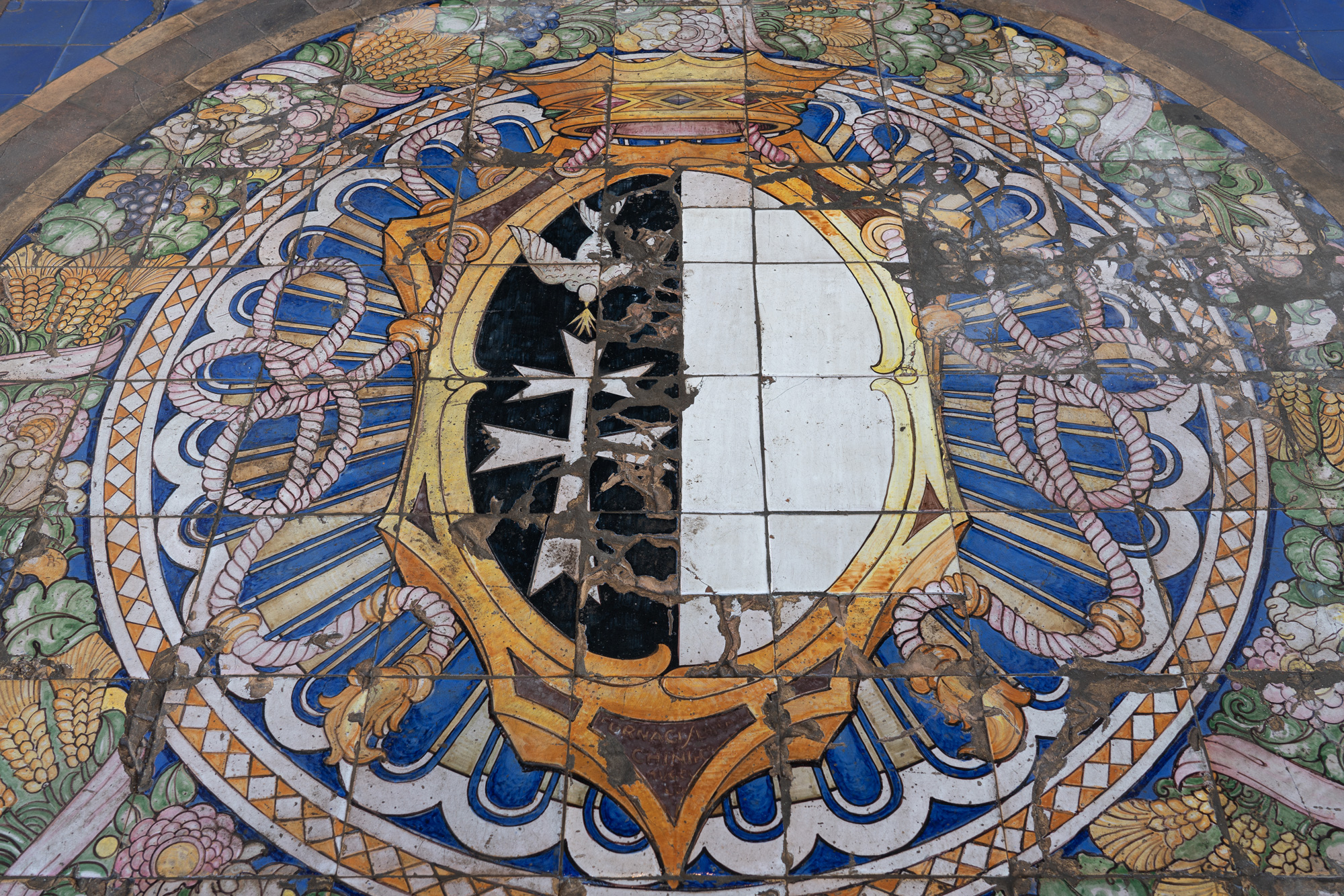
The coat of arms was created on the floor of the entrance loggia using majolica tiles, a technique that was highly popular at the time the entrance was built. It bears the signature of Galileo Chini, a highly esteemed entrepreneur and artist in the first decade of the 20th century. Coming from the Florentine schools and workshops, Chini was responsible for numerous Art Deco projects as a decorator and ceramicist in hotels, villas, and spa buildings.
Cross of Lorraine
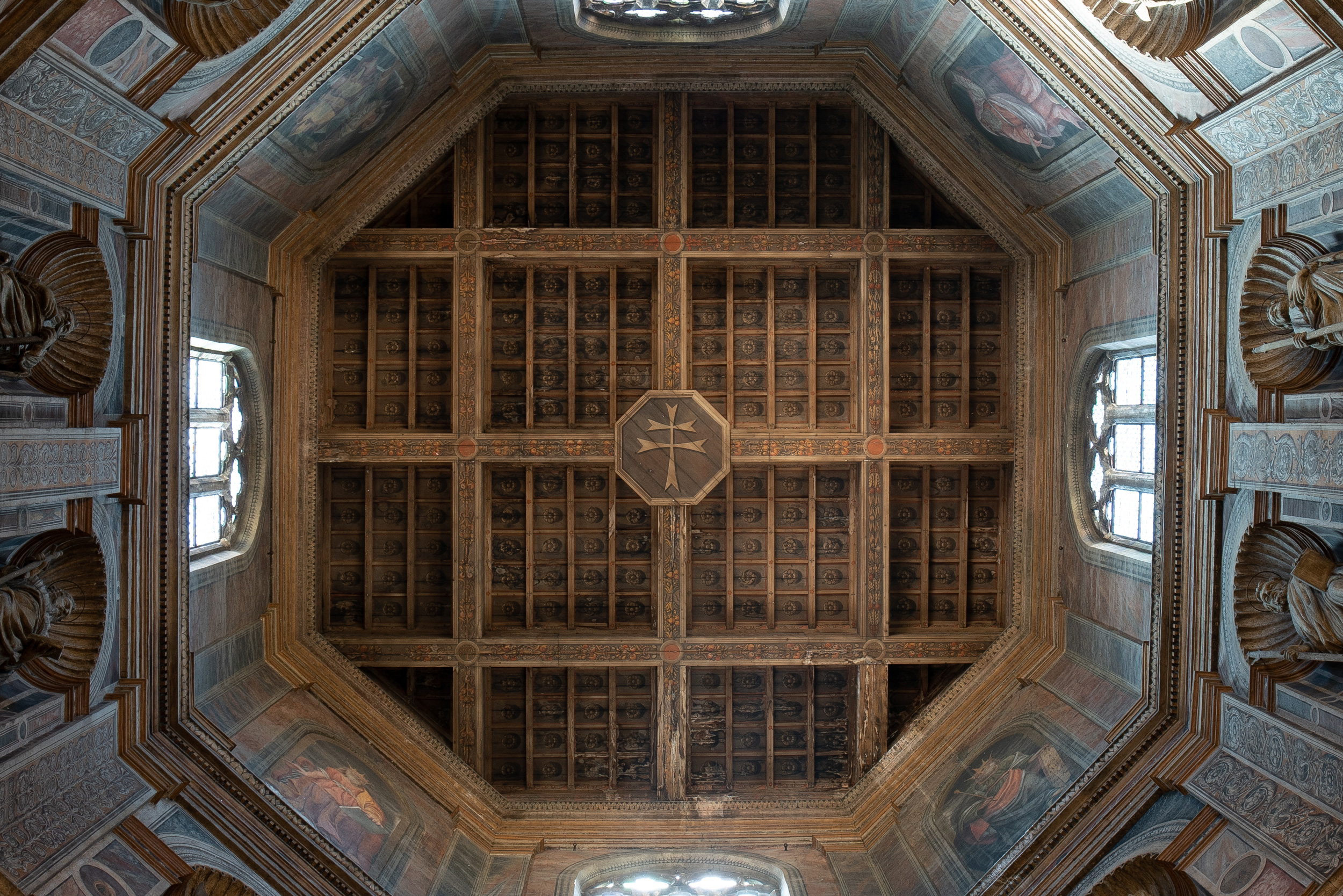
It was the emblem of the Order of the Hospitallers of the Holy Spirit, founded in 1170 by Guy de Montpellier, who was appointed by the Pope as Master of the Hospital of Santa Maria in Sassia (the name of the first Innocentian hospital) in 1204. The symbol consists of a two-barred cross surmounted by the dove of the Holy Spirit. The two-barred cross was originally known as the Patriarchal Cross and later as the Cross of Lorraine. The smaller upper bar represents the titulus Crucis, the inscription that Pontius Pilate had placed on Jesus’ cross: in Latin Iesus Nazarenus Rex Iudaeorum, abbreviated as INRI. Today, it can be found in various other contexts: as a symbol of the fight against tuberculosis, as the emblem of Free France, and on the flags of several European states.
Marble Coat of Arms of the Della Rovere Family
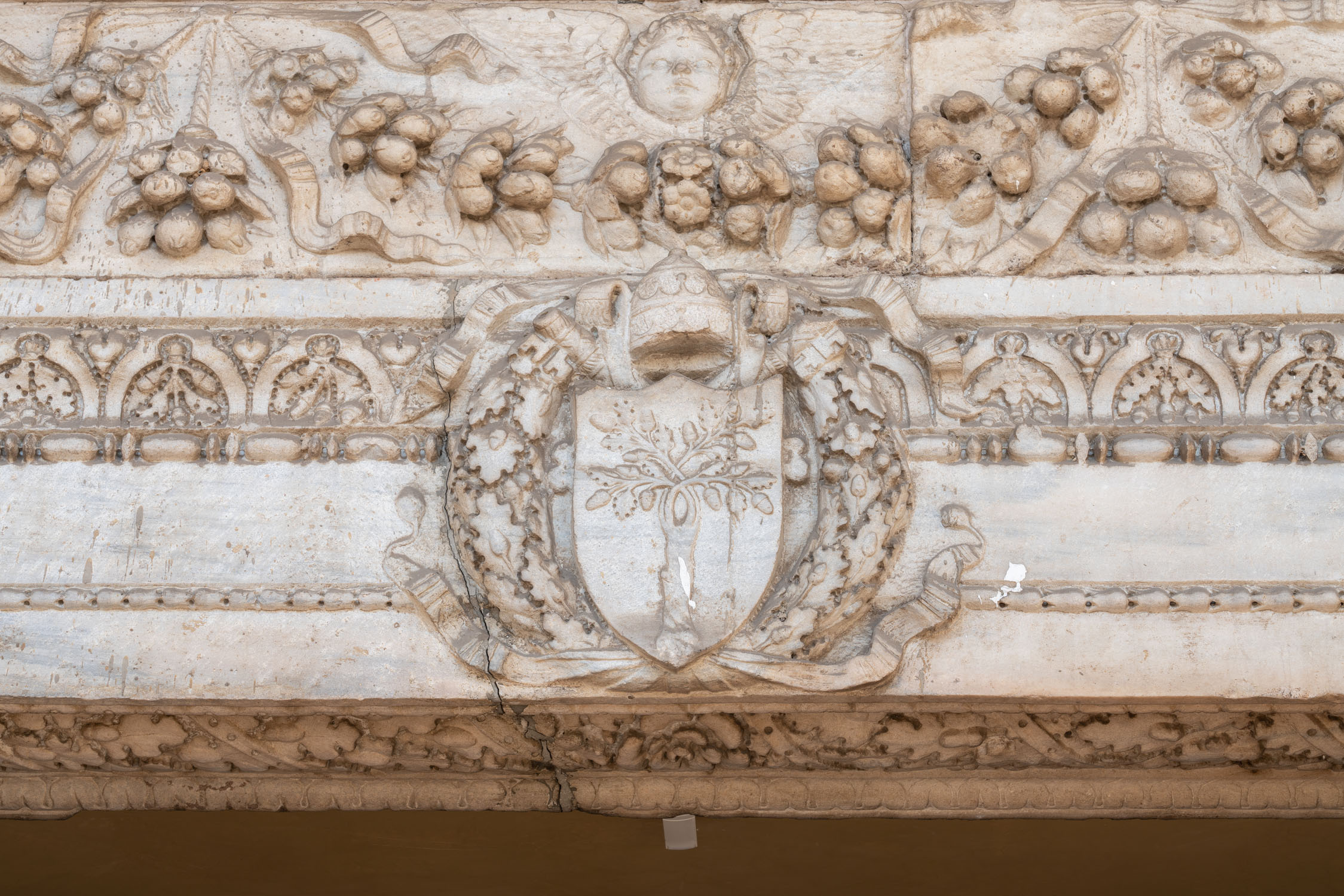
The coat of arms adorns the corbels (small brackets) supporting the vaults of the portico. The Della Rovere family began to rise in prominence with Francesco, born in 1414 to Leonardo Della Rovere of Savona, a man of humble origins, who later ascended to the papal throne as Sixtus IV. To ennoble the family’s origins, they claimed descent from a distant branch of the Della Rovere of Turin, Counts of Vinovo, and adopted their coat of arms: a blue shield featuring an uprooted golden oak tree. The marble coat of arms above the portal is surmounted by the papal tiara (miter) and crossed keys, the official insignia of the Holy See.