
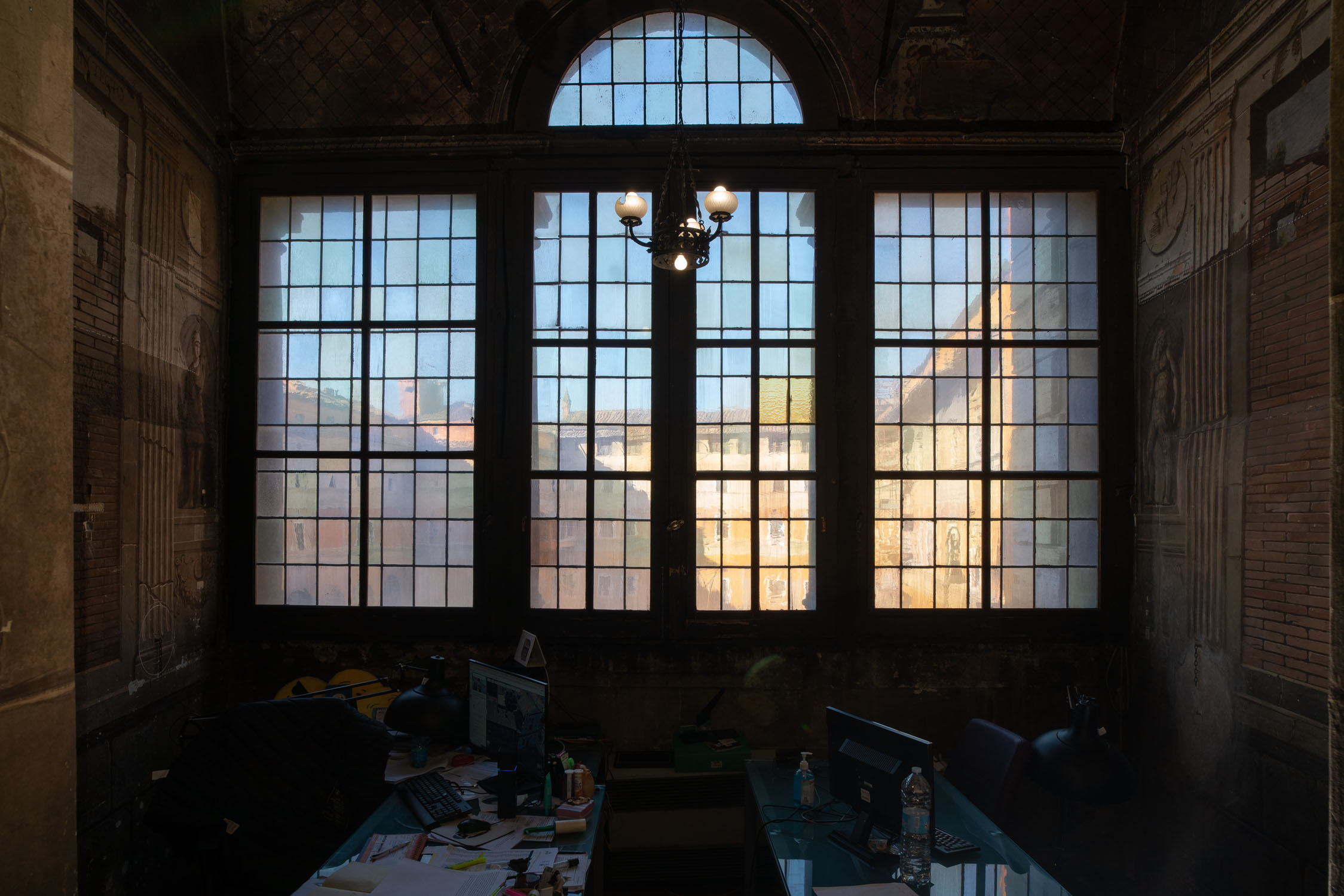
The last room in the north wing of the piano nobile is the Sala della Veronica, the “small chamber lined entirely with marble and iron, locked with six keys”, where it was once believed that the precious relic of the Veil of Veronica was kept. This cloth, presumably made of linen and venerated since the early Middle Ages, was thought to bear the true image of Christ’s face, miraculously imprinted on the fabric with which, according to tradition, Saint Veronica wiped the Redeemer’s face as He ascended to Calvary. The relic was displayed at Santo Spirito and exhibited from the Serliana window on the octave after Epiphany. Six noblemen, selected from the most influential Roman families, each held a key to unlock the room. It is believed that the Veronica is now preserved in one of the loggias of St. Peter’s dome.
Points of interest
External Façade
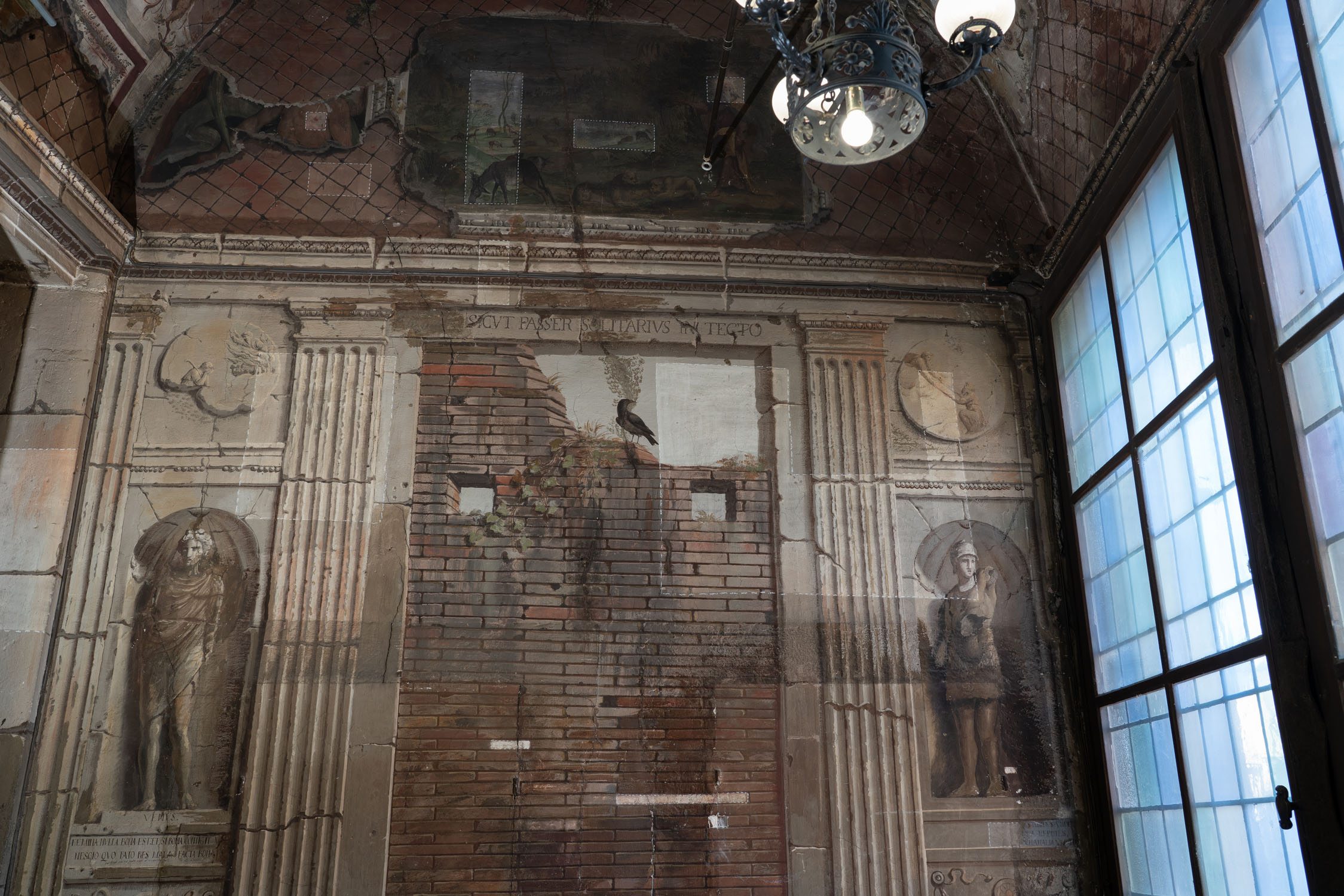
The Sala della Veronica was created within the oldest section of the building, situated between the Palazzo and the Church. Its façade features the famous Serliana, designed as a Loggia of Blessings, which was famously depicted by Raphael in The Fire in the Borgo, a fresco in one of the rooms of Julius II in the Vatican. The room is a small space illuminated by the large Serliana and adorned with 19th-century decorations featuring ruins, a work by Charles-Louis Clérisseau. On all four walls, the artist sought to recreate the illusionistic and romantic atmosphere of a grand ancient building, now reduced to ruins. Classical elements such as niches, statues, and fluted pilasters stand amidst crumbling walls and fragments of grotesques. Amid the overgrown ruins, small serpents and birds appear, to which the artist ascribes symbolic meanings, interpreted through inscriptions placed at the top of the decayed walls.